
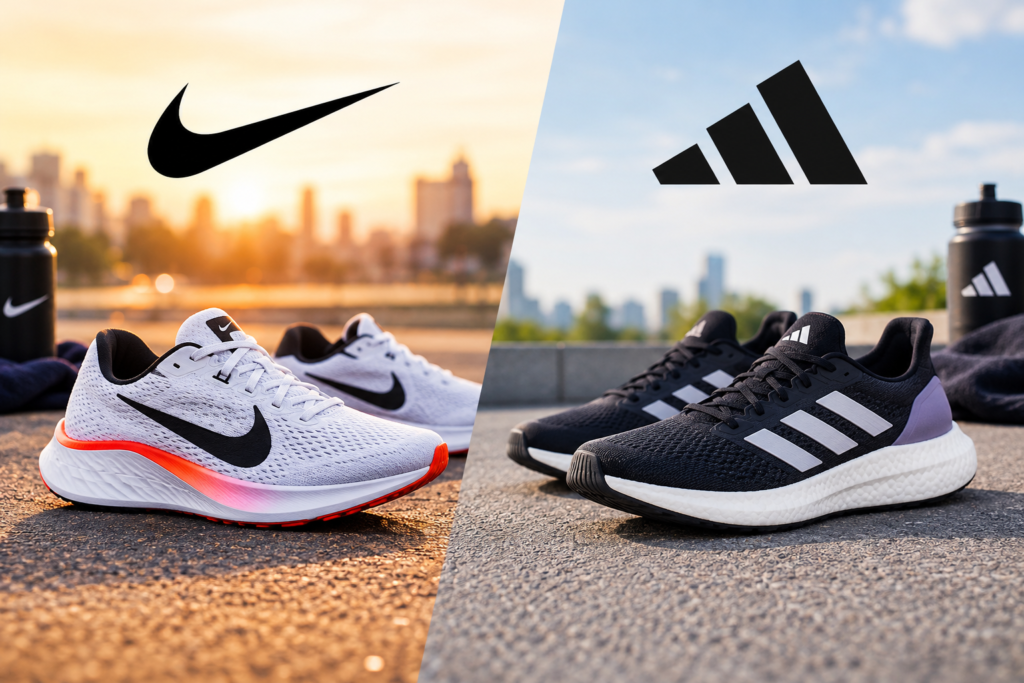
Nike vs Adidas Running Shoes: Which Should You Buy?
Choosing the right running shoes can make a significant difference in your comfort, performance, and overall running experience. Two of the most popular brands in the athletic footwear market are Nike and Adidas. Both companies offer running shoes designed for beginners, experienced runners, marathon participants, and people who simply want comfortable footwear for everyday activities.
However, deciding between Nike and Adidas can be challenging. Nike is widely recognized for its performance-focused designs, innovative cushioning technologies, and lightweight racing shoes. Adidas is equally popular for its Boost and Lightstrike cushioning systems, comfortable midsoles, and versatile running footwear.
So, which brand should you choose? The answer depends on your running style, budget, comfort preferences, and fitness goals.
In this article, we compare Nike vs Adidas running shoes based on comfort, cushioning, performance, durability, pricing, design, and overall value to help you make an informed decision.
1. Nike vs Adidas: Brand Overview
Nike and Adidas have established themselves as leading names in sports footwear, but their product ranges offer different experiences for runners.
Nike Running Shoes
Nike focuses heavily on athletic performance, innovative footwear technology, and designs intended to help runners train and compete. Its running collection includes daily trainers, lightweight shoes, cushioned models, and premium racing footwear.
Popular Nike running shoe lines include the Pegasus, Vomero, Structure, and Vaporfly. Each series serves different purposes, from everyday training to competitive racing.
Nike is particularly attractive to runners who want responsive cushioning, energetic transitions, and performance-oriented designs.
Adidas Running Shoes
Adidas offers a broad selection of running shoes that combine comfort, cushioning, stability, and performance. Its lineup includes options for casual joggers, regular runners, long-distance athletes, and competitive racers.
Popular Adidas running shoe lines include the Adizero, Supernova, Ultraboost, and Adistar families.
Adidas is especially known for Boost cushioning and its lightweight Lightstrike technologies, although the exact features vary between models.
For runners seeking comfortable everyday trainers or shoes designed for speed, Adidas provides several options across different price categories.
2. Nike vs Adidas Running Shoes: Quick Comparison
| Feature | Nike | Adidas |
|---|---|---|
| Comfort | Excellent, depending on the model | Excellent, depending on the model |
| Cushioning | ReactX, ZoomX, and other technologies | Boost, Lightstrike, and other technologies |
| Running performance | Strong training and racing options | Strong training and racing options |
| Lightweight designs | Available across several performance models | Available across several Adizero models |
| Durability | Depends on the shoe and usage | Depends on the shoe and usage |
| Design | Sporty, modern, performance-focused | Sporty, modern, versatile |
| Price range | Budget-friendly to premium | Budget-friendly to premium |
| Everyday running | Pegasus and other daily trainers | Supernova and other daily trainers |
| Racing shoes | Vaporfly and Alphafly | Adizero Adios Pro |
| Best choice | Runners who prefer Nike’s fit and ride | Runners who prefer Adidas’s fit and ride |
Important: Neither brand is universally better. The best option depends on the particular shoe, its fit, and the runner’s needs.
3. Comfort and Fit: Which Brand Feels Better?
Comfort is one of the most important factors when purchasing running shoes. Even a technologically advanced shoe may cause discomfort if it does not fit your feet properly.
Nike Comfort and Fit
Nike running shoes often feature performance-oriented shapes and engineered uppers designed to hold the foot securely. Many models provide a close-fitting feel that runners appreciate during faster workouts.
However, fit varies considerably across Nike’s collection. Some shoes have relatively narrow-feeling forefoot areas, while others provide more room.
Runners with wider feet should check the specific model’s width options and try the shoes before purchasing whenever possible.
Adidas Comfort and Fit
Adidas offers running shoes with different upper constructions, cushioning levels, and foot shapes. Some models prioritize plush comfort for everyday running, while others use a more streamlined design for speed.
The Supernova and Ultraboost families are worth considering if comfort is a major priority, although their cushioning and intended uses differ.
Adidas shoes are not automatically wider or more comfortable than Nike shoes. The fit depends on the individual model and your foot shape.
Winner: It depends on your feet.
Nike may suit runners who prefer a secure, performance-oriented fit, while certain Adidas models may appeal to those who want a softer, more relaxed running experience. Always prioritize fit over brand reputation.
4. Cushioning Technology: Nike vs Adidas
Cushioning affects how running shoes feel when your feet contact the ground. Some runners prefer soft landings, while others want a responsive sensation that supports faster movement.
Nike Cushioning Technology
Nike uses several cushioning systems across its running footwear.
- ZoomX: A lightweight, responsive foam used in many of Nike’s premium performance and racing shoes.
- ReactX: A foam designed to provide cushioning and responsiveness in selected training models.
- Air Zoom units: Technology used in certain models to deliver a responsive underfoot sensation.
Different Nike shoes combine these technologies in different ways. Premium racing models may feel very different from everyday trainers.
For runners who enjoy a lively ride and lightweight performance footwear, Nike’s higher-end models are worth exploring.
Adidas Cushioning Technology
Adidas also uses multiple cushioning systems.
- Boost: A foam technology known for its cushioning and energetic feel.
- Lightstrike: A lightweight cushioning family used in various performance shoes.
- Lightstrike Pro: A lightweight performance foam featured in selected Adizero racing models.
Boost-based shoes can appeal to runners who prefer a cushioned, comfortable feel, while Lightstrike Pro models target performance-focused runners.
Winner: A close competition.
Nike ZoomX and Adidas Lightstrike Pro both feature in high-performance running shoes. For daily training, the comparison depends on the specific foams, midsole designs, and intended use.
Rather than choosing a brand based on its cushioning name, consider how the shoe feels during a short test run.
5. Running Performance: Which Brand Helps You Run Better?
Running performance depends on several factors, including fitness, technique, training consistency, and footwear suitability. No shoe can guarantee faster times, but the right design may improve comfort and help you run efficiently.
Nike Performance
Nike has a strong range of shoes for tempo runs, interval training, and competitive racing.
The Pegasus family is a popular option for everyday training, while the Vaporfly and Alphafly lines are designed for competitive road racing.
These performance models may appeal to runners looking for responsive cushioning and efficient transitions. However, premium racing shoes are not necessary for beginners or casual runners.
Adidas Performance
Adidas also offers shoes for daily training and competitive racing.
The Supernova range includes everyday training options, while the Adizero family contains lightweight models developed for faster running and competition.
The Adizero Adios Pro series is particularly relevant to runners looking for high-performance road racing footwear.
Winner: Neither brand wins every category.
Nike and Adidas both produce excellent performance shoes. Compare models designed for the same purpose instead of comparing a premium Nike racing shoe with an entry-level Adidas trainer.
For example, compare everyday trainers against everyday trainers and racing shoes against racing shoes.
6. Durability: Which Running Shoes Last Longer?
Durability matters because running shoes experience repeated impact, friction, and exposure to different surfaces.
The lifespan of a pair depends on its construction, running distance, body weight, gait, terrain, and maintenance.
Nike Durability
Nike running shoes use different outsole materials, rubber placements, and foam constructions. Some models emphasize lightweight performance, while others are designed for regular training.
Lightweight racing shoes may prioritize speed and low weight rather than maximum lifespan.
For frequent training, examine outsole coverage, upper quality, and the shoe’s intended mileage.
Adidas Durability
Adidas also offers shoes with different outsole compounds and midsole designs. Some models feature Continental rubber or other outsole materials intended to provide traction and wear resistance.
However, durability varies between models. A soft performance foam may wear differently from a firmer daily-training foam.
Winner: No clear winner.
Neither Nike nor Adidas consistently lasts longer across its entire collection. Choose a model with suitable outsole coverage and construction for your running habits.
Replace your shoes when cushioning, traction, stability, or comfort noticeably deteriorates rather than relying exclusively on a fixed mileage target.
7. Price and Value for Money
Price is another important consideration when comparing Nike and Adidas running shoes.
Both brands sell affordable entry-level footwear and premium performance models. Prices vary by country, product generation, retailer, and discounts.
Nike Pricing
Nike offers running shoes across multiple price categories. Entry-level models can suit occasional joggers, while premium ZoomX racing shoes generally cost considerably more.
Nike may provide good value when an older model is discounted or when a versatile daily trainer meets most of your needs.
Adidas Pricing
Adidas also provides affordable running footwear alongside premium Boost and Adizero models.
Previous-generation shoes can offer particularly attractive value when retailers reduce prices to make room for newer releases.
Winner: Adidas or Nike, depending on the deal.
There is no reliable brand-wide price winner. Compare shoes with similar features and intended uses, and consider the cost per run rather than the original retail price alone.
A comfortable daily trainer that lasts well may offer better value than an expensive racing shoe you rarely need.
8. Design and Style
Although performance should be the main priority, appearance matters to many buyers.
Nike Design
Nike running shoes frequently feature bold color combinations, recognizable branding, and streamlined silhouettes. Some models have aggressive racing-inspired designs, while others offer understated colors suitable for everyday wear.
Nike may appeal to buyers who prefer a sporty, modern aesthetic.
Adidas Design
Adidas offers everything from minimalist running shoes to colorful performance footwear. Its three-stripe branding creates a recognizable appearance, and many models can transition from workouts to casual outfits.
Winner: Personal preference.
Both brands offer attractive designs. Select a shoe that matches your style without compromising fit, support, or running comfort.
9. Which Brand Is Better for Beginners?
Beginners generally benefit from comfortable, dependable running shoes that support regular training without unnecessary complexity.
Nike’s Pegasus family is worth considering because it includes versatile daily trainers suitable for a range of running activities.
Adidas’s Supernova family also offers everyday training options that may appeal to new runners.
When choosing your first pair, look for:
- Comfortable cushioning appropriate for your preferences.
- A secure heel fit without slipping.
- Enough space for your toes to spread naturally.
- Suitable traction for your usual running surfaces.
- A price that fits your budget.
- No rubbing, pinching, or uncomfortable pressure points.
Beginners do not necessarily need carbon-plated shoes or expensive racing models.
Best choice: Whichever everyday trainer fits comfortably and feels natural when you run.
10. Which Brand Is Better for Long-Distance Running?
Long-distance runners often prioritize cushioning, comfort, fit, and consistent performance over many miles.
Nike’s Vomero family includes highly cushioned training options, while the Pegasus family provides versatile daily trainers. Premium Nike racing models may also appeal to competitive marathon runners.
Adidas offers cushioned trainers in its Supernova and Ultraboost families, alongside performance-focused Adizero racing shoes.
The right choice depends on your pace, running distance, preferred cushioning, and individual biomechanics.
For marathon training, consider whether a shoe remains comfortable after longer runs. A shoe that feels excellent during a five-minute fitting may not feel equally comfortable after 15 kilometers.
Best choice: Compare well-cushioned daily trainers first, then consider specialized racing footwear if you compete.
11. Nike vs Adidas: Which Is Better for Different Runners?
Your running goals can help narrow down the options.
| Runner Type | Nike Options to Consider | Adidas Options to Consider |
|---|---|---|
| Beginners | Pegasus | Supernova |
| Everyday training | Pegasus, Vomero | Supernova, Ultraboost |
| Speed workouts | Selected lightweight performance models | Selected Adizero models |
| Competitive racing | Vaporfly, Alphafly | Adizero Adios Pro |
| Cushioned running | Vomero | Ultraboost and selected cushioned trainers |
| Budget-conscious buyers | Discounted previous-generation models | Discounted previous-generation models |
These are starting points rather than definitive rankings. Product specifications and available models can change between releases.
12. Pros and Cons of Nike Running Shoes
Advantages
- Wide selection of daily trainers and racing shoes.
- Lightweight, responsive options for performance-focused runners.
- Multiple cushioning technologies.
- Modern designs and a broad selection of styles.
- Premium models suitable for competitive road racing.
Disadvantages
- Some models may feel narrow to certain runners.
- Premium performance shoes can be expensive.
- Lightweight racing models may not prioritize maximum durability.
- Fit and cushioning vary considerably across the collection.
13. Pros and Cons of Adidas Running Shoes
Advantages
- Wide range of shoes for everyday running and competition.
- Multiple cushioning technologies.
- Lightweight options in the Adizero performance family.
- Comfortable models for runners who prefer softer cushioning.
- Previous-generation models can offer good value during sales.
Disadvantages
- Some models may feel heavy or bulky to certain runners.
- Premium performance models can be expensive.
- Fit differs across product families.
- Not every cushioning system suits every runner.
14. How to Choose the Right Running Shoes
Before purchasing Nike or Adidas running shoes, follow these practical steps.
Understand Your Running Goals
Decide whether you need shoes for casual jogging, daily training, long-distance running, or racing. Your intended use should guide your selection.
Check Your Foot Shape
Consider your foot width, arch comfort, and preferred fit. Do not assume that every shoe from one brand will fit the same way.
Test the Cushioning
Some runners prefer soft cushioning, while others prefer a firmer and more responsive ride. Try the shoe whenever possible.
Consider Your Running Surface
Road-running shoes are designed primarily for paved surfaces. Trail runners should look for footwear with suitable grip and protection for uneven terrain.
Compare Prices
Check the current price of comparable models, including previous-generation versions. A discounted shoe may offer better value than a newer release.
Prioritize Comfort
The shoe should feel comfortable from the beginning. Avoid purchasing footwear that causes pain or pressure in the expectation that it will eventually become suitable.
15. Final Verdict: Nike vs Adidas Running Shoes
Nike and Adidas both offer excellent running shoes, but neither brand is the right choice for everyone.
Nike is worth considering if you prefer its fit, enjoy responsive cushioning, or want access to performance-oriented models such as the Pegasus, Vomero, Vaporfly, and Alphafly.
Adidas is worth considering if you prefer its fit and cushioning options or want to explore everyday trainers and performance shoes from the Supernova, Ultraboost, and Adizero families.
For beginners, a comfortable daily trainer from either brand is generally a sensible starting point. Experienced runners should compare specific models according to their training needs, race goals, and preferred ride.
Our recommendation: Do not choose Nike or Adidas based on branding alone. Compare shoes in the same category, try them on if possible, and select the pair that provides the best combination of fit, comfort, performance, and value.
Ultimately, the best running shoes are the ones that suit your feet and help you run comfortably and consistently.
