Wearable technology has become an important part of everyday life, helping people monitor their health, track physical activity, receive notifications, and stay connected. Among the most popular wearable devices are smartwatches and fitness bands. Although both devices can track steps, measure heart rate, and monitor workouts, they serve different purposes and offer different features.
Choosing between a smartwatch and a fitness band depends on your lifestyle, fitness goals, budget, and preferred features. Some people want a wearable device that functions like an extension of their smartphone, while others prefer a lightweight tracker focused on health and exercise.
In this article, we will explore the differences between smartwatches and fitness bands, compare their features, discuss their advantages and disadvantages, and help you decide which device is right for you.
What Is a Smartwatch?
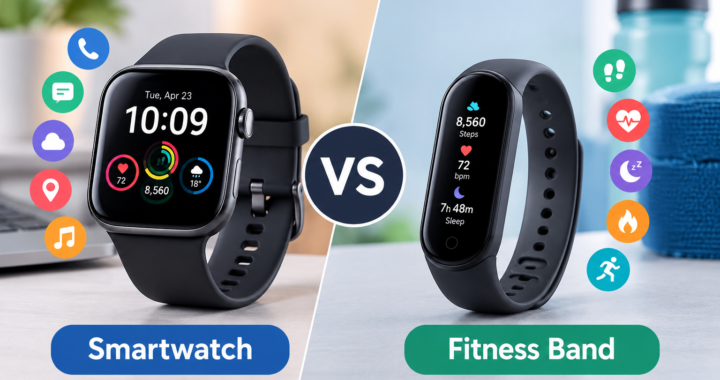
A smartwatch is a wearable electronic device designed to provide smartphone-like features directly on your wrist. It typically includes a touchscreen display, wireless connectivity, health-monitoring sensors, and support for various applications.
Modern smartwatches can display incoming calls, messages, calendar reminders, weather updates, and app notifications. Depending on the model, users may also be able to answer calls, respond to messages, control music, navigate using GPS, and make contactless payments.
Many smartwatches include advanced fitness features, such as workout tracking, heart-rate monitoring, sleep analysis, blood oxygen measurements, and GPS-based activity recording. Some premium models also offer ECG functionality and additional health-related tools.
Smartwatches are available in different styles, including sporty designs, traditional watch-inspired models, and premium devices with metal or leather finishes.
Their main purpose is to combine communication, convenience, fitness tracking, and everyday digital functionality in one wearable device.
What Is a Fitness Band?
A fitness band, sometimes called an activity tracker, is a wearable device primarily designed to monitor physical activity and selected health metrics.
Fitness bands generally feature a slim, lightweight design with a small display or indicator screen. Some basic models have limited displays, while modern fitness trackers can show notifications, workout information, and health statistics.
Common features include step counting, distance estimation, calorie-burn estimates, heart-rate monitoring, sleep tracking, and activity reminders. Certain models also support blood oxygen measurements, stress-related metrics, menstrual cycle tracking, and multiple workout modes.
Fitness bands are particularly popular among people who want to develop healthier habits without purchasing a feature-rich smartwatch.
Their lightweight construction makes them comfortable for daily wear, including during exercise and sleep. Many fitness bands also offer longer battery life than smartwatches because they have smaller displays and fewer power-intensive features.
The main purpose of a fitness band is to encourage physical activity and help users understand their daily movement patterns.
Smartwatch vs Fitness Band: Key Differences
Although smartwatches and fitness bands share several features, their differences become clearer when comparing their functionality, design, battery life, and pricing.
1. Features and Functionality
The biggest difference between these devices is the number of features they offer.
Smartwatches generally provide a wider range of functions. Depending on the model, users can receive notifications, answer calls, respond to messages, run compatible apps, control smart-home devices, and access digital assistants.
Many smartwatches also support navigation, music playback, and contactless payments.
Fitness bands concentrate on essential health and activity-tracking functions. They help users monitor steps, workouts, sleep, and heart rate without the additional complexity of a full smartwatch operating system.
Some fitness bands support smartphone notifications and basic connected features, but their app support and interactive capabilities are usually more limited.
Winner: Smartwatch for users who want a multifunctional wearable device.
2. Health and Fitness Tracking
Both devices can support healthier habits, but their capabilities vary by model.
Fitness bands are designed around activity monitoring. They typically track steps, distance, estimated calorie expenditure, heart rate, sleep duration, and workout sessions.
Smartwatches offer many of the same functions while potentially providing more advanced workout tools, detailed performance metrics, GPS navigation, and additional health-related features.
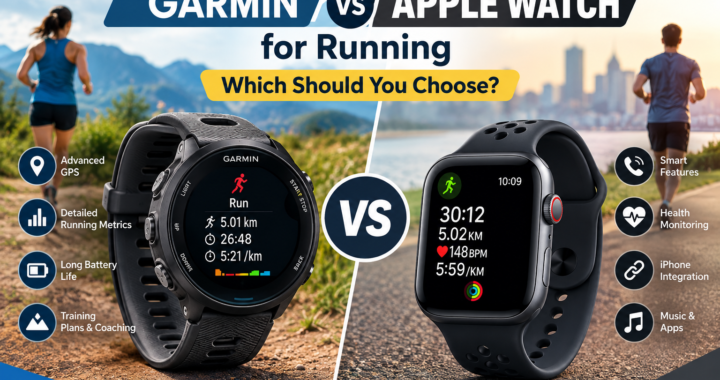
For example, runners may prefer a smartwatch with built-in GPS, structured training options, and performance statistics. Someone who mainly wants to count daily steps and monitor sleep may find a fitness band sufficient.
However, a higher price does not automatically guarantee better tracking accuracy. Sensor quality, software algorithms, device placement, and the type of activity can affect measurements.
Neither device should automatically be treated as a medical-grade diagnostic tool.
Winner: Both can be suitable. Smartwatches often offer more advanced features, while fitness bands are effective for basic activity tracking.
3. Design and Comfort
Design can make a significant difference when wearing a device throughout the day.
Smartwatches generally have larger displays and wider watch cases. Some models are lightweight, but premium versions may feel heavier because of their materials, larger batteries, and additional hardware.
Fitness bands are usually slimmer and lighter. Their narrow straps and compact bodies can make them comfortable during exercise, sleep, and everyday activities.
People with smaller wrists may prefer fitness bands because they take up less space and are less likely to interfere with certain activities.
Smartwatches, on the other hand, offer more opportunities for personalization through interchangeable straps, customizable watch faces, and different case designs.
Winner: Fitness bands for lightweight comfort; smartwatches for display options and style variety.
4. Battery Life
Battery life is another important factor when choosing between the two devices.
Many fitness bands can operate for several days or even multiple weeks on a single charge, depending on the model, screen technology, tracking settings, and frequency of use.
Smartwatches usually consume more power because they often have larger displays, faster processors, more connectivity options, and more demanding applications.
Some smartwatches require daily charging, while others can last several days or longer in power-saving modes.
Continuous GPS tracking, always-on displays, frequent notifications, and intensive workout monitoring can reduce battery life on either device.
If you dislike charging electronics frequently, a fitness band may be the more convenient option.
Winner: Fitness band in many cases, although individual models differ considerably.
5. Display Size and User Experience
Smartwatches generally feature larger, more interactive displays. Their screens make it easier to read messages, view workout statistics, navigate menus, and interact with applications.
Some models also include voice assistants, rotating crowns, physical buttons, and gesture controls.
Fitness bands usually have smaller displays that prioritize essential information. Users can quickly check the time, steps, heart rate, and workout progress, but reading long messages or navigating detailed menus may be less convenient.
Modern fitness bands have improved their display quality, and some offer bright AMOLED screens. Nevertheless, their smaller size can limit the amount of information shown at once.
Winner: Smartwatch for display quality, interaction, and overall usability.
6. Smartphone Connectivity
Smartwatches are generally better suited to people who want to interact with their smartphones from their wrists.
Depending on the model and connected phone, they may allow users to answer calls, reply to messages, manage notifications, control music, and access selected apps.
Some smartwatches also offer cellular connectivity, allowing supported functions to work without a nearby smartphone when an appropriate mobile plan is activated.
Fitness bands typically provide more basic connectivity. They may display incoming calls, show message previews, and synchronize health information with a companion smartphone application.
Some advanced fitness trackers support additional connected functions, but their capabilities are generally narrower than those of full smartwatches.
Winner: Smartwatch for communication and smartphone integration.
7. GPS and Outdoor Activities
GPS is useful for runners, cyclists, hikers, and anyone who wants to measure outdoor routes.
Many smartwatches include built-in GPS, allowing them to record routes and estimate distance without relying entirely on a smartphone.
Some fitness bands also include built-in GPS, but others use connected GPS, which depends on the phone’s location data.
If you frequently exercise outdoors without carrying your phone, check whether the device has built-in GPS.
For serious outdoor activities, also consider navigation features, route tracking, water resistance, battery life during GPS use, and compatibility with your preferred fitness applications.
Winner: Smartwatches often provide more complete outdoor activity features, although certain fitness trackers are equally suitable for basic GPS-based workouts.
8. Sleep Tracking
Both smartwatches and fitness bands can monitor sleep patterns.
Depending on the device, sleep-tracking features may estimate total sleep duration, sleep stages, nighttime movement, and changes in heart rate during sleep.
Fitness bands can be especially comfortable for overnight use because their slim designs are less noticeable while sleeping.
Some smartwatches provide detailed sleep reports and integrate sleep information with broader health and training statistics. However, a larger display or higher price does not necessarily mean more accurate sleep measurements.
Wearable sleep data should be viewed as an estimate rather than a definitive assessment of sleep quality or a substitute for professional evaluation.
Winner: Fitness bands for lightweight overnight comfort; either device can work well for sleep tracking.
9. Price and Affordability
Price is one of the most noticeable differences between the two categories.
Fitness bands generally cost less than smartwatches, making them attractive to students, beginners, and people who want basic activity-tracking features.
Budget-friendly fitness trackers may include step counting, heart-rate monitoring, sleep tracking, and smartphone notifications.
Smartwatches range from affordable entry-level models to expensive premium devices. Their prices depend on features such as display quality, materials, GPS, cellular connectivity, processor performance, and ecosystem integration.
Some affordable smartwatches offer impressive specifications, but buyers should examine software quality, sensor reliability, battery life, and long-term support rather than judging devices by appearance alone.
Winner: Fitness band for affordability and essential tracking features.
10. Water Resistance and Durability
Both devices may offer water resistance, but the level of protection depends on the specific model.
Many fitness bands are designed for everyday activities, workouts, and exposure to sweat or rain. Some can also be used while swimming.
Smartwatches may offer similar capabilities, with certain models designed for swimming, water sports, or more demanding outdoor environments.
It is important to check the manufacturer’s water-resistance rating and usage guidance. Water resistance does not mean a device is suitable for every aquatic activity, and protection can deteriorate over time.
For outdoor adventures, examine the display material, case construction, strap durability, and resistance to dust or impacts.
Winner: Neither category automatically wins. The best choice depends on the individual device’s durability and water-resistance specifications.
Smartwatch vs Fitness Band: Comparison Table
| Feature | Smartwatch | Fitness Band |
|---|---|---|
| Main purpose | Smart features, communication, and fitness | Activity and health tracking |
| Display | Usually larger and more interactive | Usually smaller and simpler |
| Health tracking | Basic to advanced, depending on model | Mainly everyday health and activity metrics |
| Workout tracking | Often includes advanced workout tools | Focuses on essential workout metrics |
| Battery life | Usually shorter | Often longer |
| Design | Larger, with more customization options | Slim, lightweight, and compact |
| App support | Usually broader | Usually more limited |
| Calls and messages | Interactive features on supported models | Generally basic notifications |
| GPS | Common on many models | Available on some models |
| Sleep tracking | Available on many models | Available on many models |
| Price | Budget to premium | Generally more affordable |
| Best for | Connected lifestyles and versatile use | Simple fitness tracking and daily habits |
Advantages of Smartwatches
Smartwatches offer several benefits for users who want more than basic activity tracking.
1. Multiple Functions in One Device
A smartwatch can combine notifications, communication, fitness monitoring, music controls, navigation, and other digital tools.
2. Better Smartphone Integration
Many models allow users to handle selected tasks without repeatedly taking their phones out of their pockets.
3. Advanced Workout Features
Depending on the model, users may access GPS tracking, detailed exercise metrics, training plans, and recovery-related insights.
4. Customization Options
Different watch faces, straps, and case styles make smartwatches suitable for various occasions.
5. Convenient Access to Information
Users can quickly check reminders, messages, weather updates, and other information directly from their wrists.
Disadvantages of Smartwatches
Despite their versatility, smartwatches have some limitations.
1. Shorter Battery Life
Many feature-rich models need more frequent charging than fitness bands.
2. Higher Cost
Advanced features, premium materials, and cellular connectivity can increase the purchase price.
3. More Complex Interface
Users who only want to track steps or monitor sleep may find the additional features unnecessary.
4. Potential Distractions
Frequent notifications can interrupt concentration if they are not managed carefully.
5. Larger Design
Some models may feel bulky during sleep, workouts, or everyday activities.
Advantages of Fitness Bands
Fitness bands are particularly useful for people who want simple, accessible health and activity tracking.
1. Lightweight Construction
Their slim design makes them comfortable for extended wear.
2. Longer Battery Life
Many fitness bands last several days or longer between charges.
3. Affordable Pricing
They can provide essential tracking features without the cost of a premium smartwatch.
4. Easy-to-Understand Tracking
Their interfaces often emphasize steps, heart rate, sleep, and daily activity goals.
5. Useful for Building Healthy Habits
Daily movement reminders and progress reports can encourage users to become more active.
Disadvantages of Fitness Bands
Fitness bands also have limitations that buyers should consider.
1. Limited Smart Features
Most provide fewer interactive communication tools than full smartwatches.
2. Smaller Displays
Reading notifications and viewing detailed information can be less convenient.
3. Restricted App Support
Many fitness bands rely on a companion smartphone app instead of supporting a broad selection of standalone applications.
4. Variable GPS Capabilities
Some models depend on a connected smartphone for location tracking.
5. Fewer Customization Options
Although some trackers support interchangeable straps, they may offer fewer design and interface options than smartwatches.
Which Device Is Better for Different Users?
The right choice depends on how you plan to use your wearable device.
For Fitness Beginners
A fitness band is often a practical starting point. It can help you monitor steps, track workouts, and establish regular activity goals without requiring a large investment.
For Runners and Cyclists
A smartwatch with built-in GPS, reliable workout tracking, and detailed performance metrics may be more suitable. However, a fitness tracker with the GPS and training features you need can also be a good choice.
For Office Workers and Professionals
A smartwatch may be useful if you want to check notifications, manage reminders, control music, and access selected smartphone functions during the workday.
A fitness band may be preferable if you want to track movement and health metrics without frequent digital interruptions.
For Students
Fitness bands can be a budget-friendly choice for tracking activity, sleep, and exercise.
Students who want interactive notifications, music controls, and additional applications may prefer an affordable smartwatch.
For People Who Prioritize Sleep Tracking
A lightweight fitness band may be more comfortable for overnight wear. However, check the device’s sleep-tracking features and battery performance before purchasing.
For Outdoor Enthusiasts
A smartwatch with reliable GPS, route-tracking capabilities, suitable water resistance, and a durable design may be the better option for hiking, cycling, and other outdoor activities.
For Budget-Conscious Buyers
A fitness band is usually the more economical choice if your main priorities are steps, heart rate, sleep, and basic workout tracking.
What Should You Consider Before Buying?
Before choosing a smartwatch or fitness band, evaluate the following factors.
Your Main Goal: Decide whether you primarily want fitness tracking, smartphone connectivity, or a combination of both.
Battery Life: Check the manufacturer’s estimated battery life and consider how features such as GPS and always-on displays affect it.
Compatibility: Confirm that the device works with your smartphone. Some features may be restricted when pairing devices from different ecosystems.
Health Features: Compare the sensors and metrics that matter to you. Do not assume that every device supports ECG, blood oxygen measurements, or advanced workout analysis.
Comfort: Consider weight, strap material, case size, and comfort during sleep.
Budget: Set a spending limit and compare the features you will actually use.
Software Support: Look for reliable companion apps, regular software updates, and clear privacy settings.
Durability: Review water resistance, construction materials, warranty coverage, and replacement strap availability.
Making a decision based on your actual needs is usually more useful than purchasing the device with the longest feature list.
Can a Fitness Band Replace a Smartwatch?
A fitness band can replace a smartwatch for people who primarily need activity tracking, sleep monitoring, heart-rate information, and basic notifications.
For example, someone who wants to count steps, track daily walks, and monitor exercise may not need a large touchscreen or extensive app support.
However, fitness bands may not replace smartwatches for users who frequently answer calls, respond to messages, use navigation, make contactless payments, or access applications from their wrists.
The distinction is becoming less clear as fitness trackers gain new features and entry-level smartwatches become more affordable.
Ultimately, the best replacement depends on the functions you use regularly rather than the category name printed on the product box.
Are Smartwatches and Fitness Bands Accurate?
Both devices can provide useful estimates of physical activity and selected health metrics, but their accuracy varies.
Step counts and heart-rate measurements can be reasonably useful for general monitoring under suitable conditions. However, performance may change with movement, exercise intensity, skin contact, device fit, and sensor design.
Calorie-burn estimates are particularly approximate because they depend on multiple factors, including personal characteristics and activity type.
Sleep-stage estimates should also be interpreted cautiously because consumer wearables do not directly measure every physiological signal used in clinical sleep assessments.
For medical concerns, consult a qualified healthcare professional rather than relying solely on wearable readings.
When comparing devices, look for independent testing, transparent feature descriptions, and software that presents measurements clearly.
Final Verdict: Smartwatch vs Fitness Band
Smartwatches and fitness bands serve similar purposes, but they are designed for different priorities.
A smartwatch is the better choice for users who want advanced connectivity, interactive notifications, convenient smartphone features, and comprehensive workout tools. It is particularly suitable for people who want one wearable device for everyday tasks and fitness activities.
A fitness band is the better choice for users who prioritize affordability, lightweight comfort, longer battery life, and essential health and activity tracking. It can be an excellent option for beginners and people who prefer a simpler wearable experience.
Before making a purchase, compare the specific models rather than relying entirely on their categories. Some fitness trackers offer excellent health features, while certain smartwatches provide longer battery life than expected.
The best wearable device is ultimately the one that fits your routine, supports your goals, and provides features you will use consistently.