Smartwatches have become popular accessories for people who want to stay connected, monitor their health, track workouts, and manage everyday activities from their wrists. With so many options available, choosing between a budget smartwatch and a premium smartwatch can be challenging. Budget models offer attractive features at affordable prices, while premium models promise better performance, advanced health tracking, improved designs, and a more complete user experience.
But does spending more money always mean getting a better smartwatch? The answer depends on your needs, lifestyle, smartphone, and expectations.
In this article, we compare budget and premium smartwatches across design, display, health monitoring, fitness tracking, battery life, software, durability, and overall value to help you decide which option is right for you.
1. What Is a Budget Smartwatch?
A budget smartwatch is an affordable wearable designed to provide essential smartwatch features without requiring a significant investment. These devices typically include step counting, heart-rate monitoring, sleep tracking, smartphone notifications, workout modes, and basic activity tracking.
Many budget smartwatches also feature colorful touchscreen displays, customizable watch faces, alarms, timers, and Bluetooth calling. Some models offer blood oxygen estimates, menstrual cycle tracking, and built-in GPS, although feature availability and accuracy vary between devices.
Budget smartwatches are particularly appealing to first-time buyers, casual fitness enthusiasts, students, and people who want basic wearable functionality.
Common features of budget smartwatches include:
- Affordable purchase prices.
- Basic health and fitness tracking.
- Smartphone notifications and call alerts.
- Multiple sports and activity modes.
- Lightweight designs and customizable watch faces.
- Battery life that can extend for several days.
- Compatibility with selected Android and iOS smartphones.
However, lower prices can involve compromises in sensor quality, software support, display technology, construction materials, and advanced features.
2. What Is a Premium Smartwatch?
A premium smartwatch is designed for users who want more sophisticated technology, stronger integration with their smartphones, and a broader range of health, fitness, and productivity features.
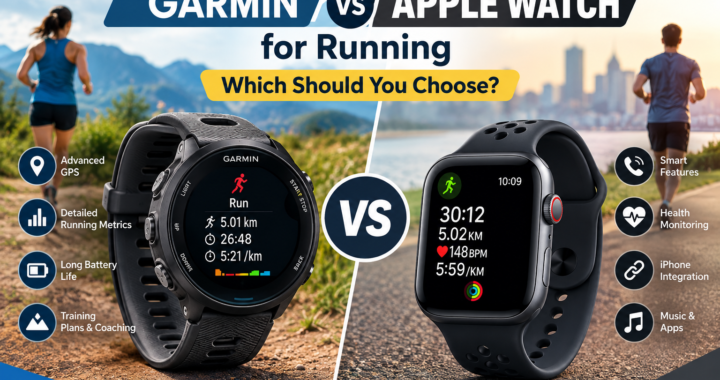
Examples include the Apple Watch, Samsung Galaxy Watch, and higher-end Garmin models. Although their capabilities differ, these watches generally offer more advanced hardware or software than basic budget alternatives.
Depending on the model, a premium smartwatch may include built-in GPS, ECG functionality, advanced workout analysis, cellular connectivity, improved water resistance, and access to a large selection of applications.
Premium watches may also feature brighter displays, more durable materials, faster processors, and longer software support.
Common features of premium smartwatches include:
- High-quality AMOLED or OLED displays.
- Advanced health and fitness monitoring.
- More detailed workout statistics and training tools.
- Improved smartphone integration.
- Support for third-party applications.
- Premium materials, including stainless steel or titanium on selected models.
- Better navigation, connectivity, or GPS capabilities on certain devices.
- Additional safety and communication features.
Not every premium smartwatch includes every feature. For example, some Garmin models prioritize fitness and battery life, while Apple Watch and Samsung Galaxy Watch models emphasize smartphone integration and everyday applications.
3. Design and Build Quality
One of the most noticeable differences between budget and premium smartwatches is their construction.
Budget Smartwatch Design
Budget smartwatches often use plastic cases, lightweight aluminum-style finishes, and silicone straps. These materials help manufacturers keep prices low while producing comfortable devices suitable for everyday wear.
Many affordable models look stylish and feature modern designs. However, their buttons, straps, bezels, and overall construction may feel less refined than those of more expensive alternatives.
Scratch resistance and durability can also vary considerably.
Premium Smartwatch Design
Premium smartwatches generally offer more sophisticated finishes, carefully designed controls, and better-quality materials. Depending on the model, buyers may find aluminum, stainless steel, titanium, sapphire crystal, or strengthened glass.
These materials can improve appearance and durability, although the exact benefits depend on the construction.
Premium watches also tend to offer more polished straps, improved haptic feedback, and physical controls that feel more responsive.
Which is better?
Choose a budget smartwatch if you prioritize affordability and everyday comfort. Consider a premium model if materials, appearance, durability, and finishing quality are important to you.
4. Display Quality and User Experience
The display affects how easily you can read notifications, check workout statistics, and interact with your smartwatch outdoors.
Budget smartwatches may use LCD or AMOLED screens. Some provide excellent colors and sharp visuals, while others have limited brightness, slower touch response, or less impressive viewing angles.
Premium smartwatches typically offer brighter, more refined displays with better outdoor visibility and smoother interfaces. Features such as always-on displays, adaptive brightness, and improved screen protection may also be available.
However, display quality is not determined by price alone. Some affordable smartwatches have excellent AMOLED screens, while certain premium devices prioritize battery efficiency over display size or resolution.
Winner: Premium smartwatches generally deliver a more polished display experience, but budget models can still provide attractive screens for everyday use.
5. Health Monitoring and Fitness Tracking
Health and fitness tracking are among the most important reasons people purchase smartwatches.
Both budget and premium devices can measure everyday activity, but the depth of their tracking features often differs.
Budget Smartwatch Health Features
Most budget models provide basic measurements such as:
- Heart-rate estimates.
- Step counts and distance estimates.
- Sleep-duration tracking.
- Calorie-burn estimates.
- Workout summaries.
- Blood oxygen estimates on selected models.
These features can help users understand their activity patterns and establish healthier routines.
However, sensor quality, algorithms, and measurement consistency vary. Some inexpensive watches may produce inaccurate readings during intense exercise or irregular movement.
Premium Smartwatch Health Features
Premium devices may offer more sophisticated monitoring, including ECG measurements, irregular heart-rhythm notifications, advanced sleep analysis, skin-temperature sensing, and more detailed workout metrics.
Availability depends on the specific device, country, software version, and regulatory approvals. Some features require compatible smartphones or additional setup.
Premium watches may also provide more comprehensive health dashboards and easier access to historical measurements.
It is important to understand that smartwatch readings are not a substitute for professional medical evaluation. Even premium devices have limitations, and certain measurements are intended for general wellness rather than diagnosis.
Which is better?
Budget smartwatches are suitable for basic activity awareness. Premium devices are generally better for users who want more advanced tracking, additional sensors, and deeper analysis.
6. GPS and Outdoor Fitness Tracking
GPS is particularly important for runners, cyclists, hikers, and outdoor fitness enthusiasts.
Some budget smartwatches rely on a connected smartphone to obtain GPS information. This can be sufficient for casual walks and occasional workouts, but it requires carrying a compatible phone.
Other affordable models include built-in GPS, making them more convenient for outdoor activities.
Premium smartwatches frequently provide more advanced positioning systems, improved GPS performance, and additional navigation features. Selected models support multiple satellite systems or dual-frequency GPS to improve tracking in challenging environments.
Higher-end sports watches may also offer route navigation, elevation information, training-load analysis, recovery estimates, and specialized workout profiles.
Nevertheless, a premium label does not automatically guarantee superior GPS accuracy. Performance depends on the model, satellite reception, surroundings, and software.
Winner: Premium sports-focused smartwatches generally offer more advanced outdoor training tools, but budget models with built-in GPS can be sufficient for casual exercise.
7. Battery Life and Charging
Battery life is another major difference between smartwatch categories, although premium devices do not always last longer.
Many budget smartwatches advertise several days of battery life, particularly when users disable features such as continuous health monitoring, always-on displays, and frequent notifications.
Premium smartwatches can offer excellent battery endurance, but some feature-rich models need daily charging. Cellular connectivity, bright displays, GPS workouts, and background applications can increase power consumption.
On the other hand, premium outdoor watches from brands such as Garmin may last considerably longer than conventional smartwatch models. Some use power-efficient displays or solar-assisted charging to extend battery life.
Charging speed and convenience also vary.
Before purchasing, consider whether you prefer a device that offers extensive applications and smart features or one that prioritizes long-lasting battery performance.
Winner: Budget models can offer impressive battery life, while premium sports watches may provide the best endurance. Compare individual specifications rather than assuming expensive watches last longer.
8. Apps, Software, and Smartphone Compatibility
A smartwatch becomes more useful when its software works smoothly with your phone.
Budget smartwatches commonly connect through a companion application. They may display calls, messages, calendar alerts, and selected app notifications.
However, app selection is often limited. Some models provide only basic controls, while others restrict notification replies, music management, or synchronization with third-party fitness services.
Premium smartwatches typically offer more advanced operating systems and broader application support.
For example, Apple Watch models work most closely with iPhones, while Samsung Galaxy Watch models offer extensive integration with Android smartphones, particularly Samsung devices. Garmin watches focus heavily on fitness features and compatible health and training applications.
Premium models may also provide contactless payments, offline music, voice assistants, navigation, and more interactive notifications.
Compatibility remains important. Certain features may not work when pairing a watch with an unsupported phone.
Winner: Premium smartwatches generally offer a richer software experience, but a budget watch may be sufficient if you mainly need notifications and basic fitness information.
9. Calling, Messaging, and Connectivity
Many affordable smartwatches support Bluetooth calling through a connected smartphone. This allows users to answer calls directly from their wrists when the phone is nearby.
Some budget models also display message notifications, but replying to messages may be limited or unavailable.
Premium smartwatches usually provide more sophisticated communication features. Depending on the model, users may be able to reply to messages, use voice dictation, interact with assistants, or make calls independently through cellular connectivity.
Cellular functionality generally requires a compatible watch, supported network, and potentially an additional carrier plan.
Premium models may also offer Wi-Fi, NFC payments, and more reliable integration with connected devices.
If you primarily want to see incoming calls and notifications, a budget smartwatch can work well. If you want to leave your phone behind occasionally, a compatible premium model may be more suitable.
10. Water Resistance and Durability
Water resistance is another feature worth checking before making a purchase.
Many budget smartwatches advertise water resistance suitable for everyday activities, including splashes, rain, or selected workouts. However, the exact rating matters, and not every model is suitable for swimming.
Premium smartwatches may offer stronger water-resistance specifications, more robust construction, and specialized features for swimming, diving, or outdoor adventures.
Some premium sports watches are also tested against demanding environmental conditions.
Still, expensive construction does not make every smartwatch indestructible. Water resistance can change with wear, impact, repairs, or aging seals.
Always check the manufacturer’s instructions before exposing a smartwatch to water, particularly saltwater, hot water, or high-pressure conditions.
Winner: Premium models often provide more options for demanding activities, but some budget watches are sufficiently durable for everyday use.
11. Price and Overall Value
Price is usually the most significant difference between budget and premium smartwatches.
Budget smartwatches are designed to provide essential features at a relatively low cost. They can be excellent purchases for people who want basic notifications, activity tracking, and an attractive wearable without spending heavily.
Premium smartwatches cost more because of their hardware, software capabilities, materials, advanced sensors, brand positioning, or specialized fitness features.
However, a higher price does not automatically mean better value.
For example, someone who only checks the time, counts steps, and receives notifications may never use the advanced features of a premium watch. In that case, a well-reviewed budget model could provide better value.
Conversely, a runner who needs accurate GPS tracking, detailed training data, and recovery analysis may benefit from investing in a more advanced device.
Consider the purchase price alongside battery replacement options, warranty coverage, software support, accessories, and any recurring cellular subscription fees.
12. Budget vs Premium Smartwatch: Quick Comparison
| Feature | Budget Smartwatch | Premium Smartwatch |
|---|---|---|
| Price | Affordable | More expensive |
| Design | Basic to stylish | Often more refined |
| Materials | Commonly plastic or basic aluminum | May include stainless steel or titanium |
| Display | LCD or AMOLED, depending on model | Generally higher-end displays |
| Heart-rate tracking | Usually available | Often includes more advanced analysis |
| ECG | Uncommon | Available on selected models |
| GPS | Phone-connected or built-in | Often more advanced on comparable models |
| Battery life | Frequently several days | Varies from daily charging to multiple weeks |
| Apps | Often limited | Generally broader support |
| Calling | Usually Bluetooth calling on selected models | More advanced options on selected models |
| Payments | Available on selected models | More common on supported models |
| Durability | Suitable for everyday use, depending on model | More premium and rugged options |
| Best for | Casual users and beginners | Enthusiasts and advanced users |
13. Who Should Buy a Budget Smartwatch?
A budget smartwatch is a practical choice if you:
- Want to monitor steps and daily activity.
- Need basic heart-rate and sleep estimates.
- Prefer receiving calls and notifications on your wrist.
- Exercise casually rather than following detailed training plans.
- Want an affordable first smartwatch.
- Prefer charging less frequently without needing advanced applications.
- Do not need specialized health sensors or advanced navigation.
For these users, a reliable budget smartwatch can cover most everyday needs.
14. Who Should Buy a Premium Smartwatch?
A premium smartwatch may be worth the additional investment if you:
- Exercise regularly and want detailed training analysis.
- Need built-in GPS and advanced navigation features.
- Want a broader selection of applications.
- Prefer better smartphone integration.
- Need selected advanced health-monitoring features.
- Want cellular connectivity on a compatible model.
- Value premium materials and a refined user experience.
- Participate in demanding outdoor activities or structured sports training.
Before buying, make sure the features you want are available on the exact model and compatible with your smartphone.
Conclusion
The choice between a budget smartwatch and a premium smartwatch depends on how you plan to use it.
Budget smartwatches provide essential features such as activity tracking, notifications, heart-rate estimates, and customizable displays at affordable prices. They are suitable for casual users who want convenience without paying for advanced technology.
Premium smartwatches offer a more sophisticated experience through improved materials, advanced health features, broader application support, and specialized fitness capabilities. However, their value depends on whether you actually need those extras.
Choose a budget smartwatch if affordability and essential functionality are your priorities. Choose a premium smartwatch if advanced fitness tracking, smartphone integration, specialized features, or higher-end construction justify the extra cost.
Ultimately, the best smartwatch is not necessarily the most expensive one. It is the device that meets your requirements, works with your smartphone, and provides the right balance of features, comfort, battery life, and price.