Fitness trackers have become essential tools for people who want to improve their health, monitor daily activity, and achieve specific fitness goals. Whether you want to count steps, track your sleep, monitor your heart rate, or prepare for a marathon, choosing the right device can make a significant difference in your fitness journey.
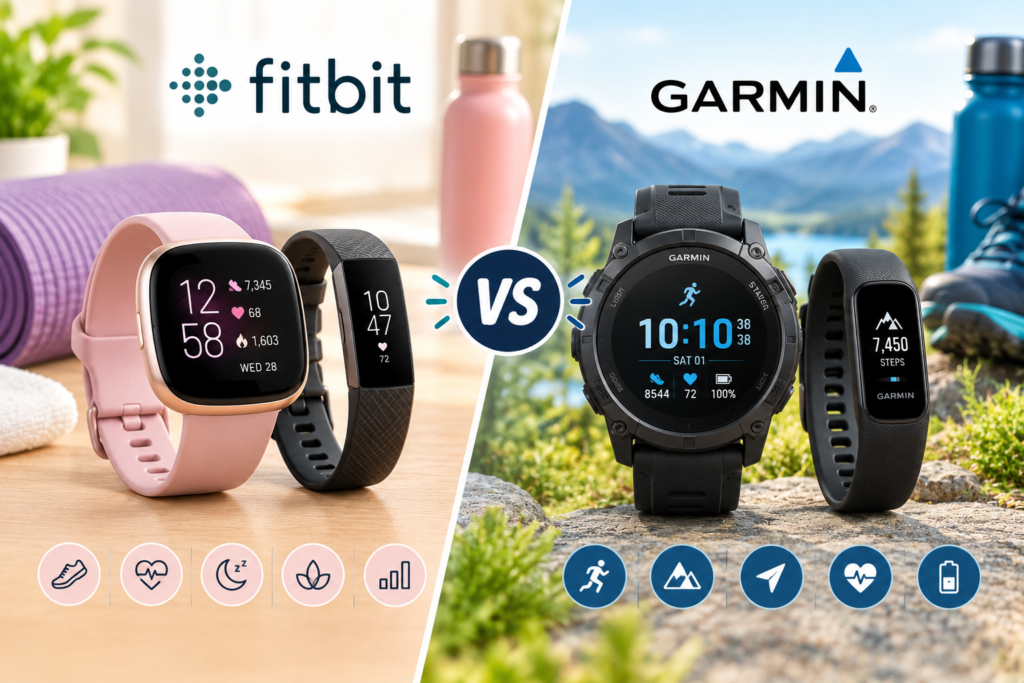
Two popular names in the fitness tracking market are Fitbit and Garmin. Both brands offer devices designed to monitor physical activity, provide health insights, and help users understand their performance. However, they appeal to somewhat different audiences.
Fitbit generally focuses on everyday wellness, accessible health tracking, and user-friendly experiences. Garmin is particularly popular among runners, cyclists, outdoor enthusiasts, and athletes who want detailed performance metrics and advanced training tools.
But which brand is right for you? This comparison explores their features, accuracy, battery life, pricing considerations, and overall value to help you choose the fitness tracker that best matches your goals.
1. Fitbit vs Garmin: Understanding the Brands
Fitbit: Fitness Tracking Made Simple
Fitbit is known for making fitness and wellness tracking accessible to everyday users. Its devices typically emphasize daily activity, sleep monitoring, heart rate tracking, stress management, and general health awareness.
Fitbit trackers and smartwatches are suitable for beginners who want to establish healthier habits without dealing with complicated athletic metrics. They can help users understand their activity levels, monitor sleep patterns, and work toward daily movement goals.
The Fitbit Charge series is designed for people who want a relatively compact fitness tracker, while the Fitbit Sense and Versa families have offered more smartwatch-oriented features.
Fitbit is a strong option for people who prioritize convenience, wellness insights, and straightforward fitness monitoring.
Garmin: Built for Performance and Adventure
Garmin offers a broad range of fitness watches designed for casual exercisers, dedicated athletes, and outdoor adventurers.
Its product families include the Forerunner series for runners and triathletes, the Fenix and Epix lines for outdoor activities, and the Venu series for users who want a combination of smartwatch functionality and fitness tracking.
Garmin devices often provide advanced workout statistics, training-load analysis, recovery guidance, GPS navigation, and detailed activity profiles.
Depending on the model, users may also access features such as offline maps, multi-band GPS, altitude tracking, and specialized metrics for activities like cycling, swimming, and trail running.
Garmin is particularly appealing to people who want to measure athletic progress and use performance data to improve their training.
2. Fitbit vs Garmin: Feature Comparison
Although both brands offer fitness and health monitoring, their strengths differ.
| Feature | Fitbit | Garmin |
|---|---|---|
| Daily step tracking | Excellent | Excellent |
| Heart rate monitoring | Available on most current devices | Available on most current devices |
| Sleep tracking | Strong wellness-focused insights | Detailed sleep and recovery insights |
| GPS tracking | Built-in or connected GPS, depending on model | Built-in GPS on many fitness watches |
| Running metrics | Basic to moderately advanced, depending on device | Extensive metrics on supported models |
| Training analysis | More wellness-focused | Advanced training and performance tools |
| Battery life | Generally several days, depending on model | Often several days to multiple weeks, depending on model |
| Outdoor navigation | Limited on many models | Advanced features on selected models |
| Smartwatch features | Notifications, apps, and selected integrations | Notifications, apps, and selected integrations |
| Best suited for | Everyday wellness and fitness | Sports, structured training, and outdoor activities |
Actual capabilities vary considerably by device, so comparing specific models is important before making a purchase.
3. Health and Fitness Tracking
Health tracking is one of the primary reasons people purchase a wearable device.
Fitbit Health Features
Fitbit offers several tools to help users understand their everyday health habits. Depending on the device, these can include:
- Daily step and distance tracking
- Calories burned estimates
- Continuous heart rate monitoring
- Sleep duration and sleep-stage estimates
- Active Zone Minutes
- Stress-management tools
- Blood oxygen estimates during supported measurements
- Menstrual health tracking through the app
Fitbit’s wellness-oriented approach makes it easy to identify patterns and establish realistic goals.
For example, someone who spends most of the day sitting can use reminders and activity summaries to increase daily movement. Someone struggling with inconsistent sleep can review sleep trends and adjust their bedtime routine.
Some advanced insights and personalized features may require a paid Fitbit Premium subscription, depending on the device and feature.
Garmin Health Features
Garmin also provides comprehensive health tracking, but many of its devices connect these measurements with physical performance and recovery.
Depending on the model, Garmin features may include:
- Heart rate monitoring
- Sleep tracking
- Stress monitoring
- Body Battery energy estimates
- Pulse Ox measurements
- Heart rate variability status
- Respiration tracking
- Training readiness
- Recovery-time estimates
Garmin’s Body Battery feature estimates the body’s available energy by combining information such as stress, sleep, and activity.
This can help users decide whether to complete a demanding workout or choose a lighter activity.
Garmin also connects health information with training statistics, making it useful for athletes who want to understand how exercise, sleep, and recovery interact.
Winner: Fitbit is excellent for straightforward wellness tracking, while Garmin offers more detailed connections between health, recovery, and athletic performance.
4. GPS and Outdoor Activity Tracking
GPS performance is an important consideration for runners, cyclists, hikers, and anyone who exercises outdoors.
Fitbit GPS Capabilities
Some Fitbit devices include built-in GPS, allowing users to record outdoor routes without carrying a smartphone. Other models rely on connected GPS, which uses a paired phone.
Built-in GPS is convenient for people who want to leave their phones at home during a run or walk.
Fitbit can record information such as distance, pace, and route, depending on the device and activity.
However, its outdoor navigation and advanced athletic features are generally less extensive than those available on Garmin’s specialized sports watches.
Garmin GPS Capabilities
Garmin is especially strong in GPS-based sports tracking.
Many Garmin fitness watches offer built-in GPS, while selected premium models support multiple satellite systems and multi-band GPS for improved positioning in challenging environments.
Depending on the watch, additional features may include:
- Route navigation
- Breadcrumb trails
- Turn-by-turn directions
- Elevation profiles
- Trail-running statistics
- Cycling performance metrics
- Altitude and elevation tracking
- Offline maps on supported models
These capabilities can be particularly valuable for trail runners, cyclists, hikers, and people who regularly explore unfamiliar routes.
Winner: Garmin is the better choice for serious outdoor activities, navigation, and detailed GPS-based performance tracking.
5. Sleep Tracking and Recovery
Sleep plays an important role in physical performance, concentration, and general well-being. Both Fitbit and Garmin provide tools to help users understand their sleep patterns.
Fitbit Sleep Tracking
Fitbit tracks sleep duration and estimates different sleep stages on supported devices. Its app presents information in an accessible format, helping users identify trends over time.
Sleep scores and related insights can make it easier to evaluate whether sleep habits are improving.
For people who want to build a consistent bedtime routine or understand their sleeping patterns, Fitbit provides a relatively straightforward experience.
Garmin Sleep Tracking
Garmin also tracks sleep duration and estimates sleep stages on supported watches. Some devices combine sleep information with heart rate variability, stress, and Body Battery measurements.
This provides additional context about recovery and readiness for physical activity.
For example, a runner who experiences poor sleep after an intense training session may use Garmin’s recovery information to decide whether to reduce the next day’s workout intensity.
Neither device should be treated as a medical sleep diagnostic tool, and wearable sleep-stage estimates are not equivalent to a clinical sleep study.
Winner: Both brands offer useful sleep tracking. Fitbit is appealing for accessible sleep insights, while Garmin has an advantage for users who want to connect sleep with training and recovery.
6. Battery Life: Which Tracker Lasts Longer?
Battery life affects how conveniently a fitness tracker fits into everyday life.
Fitbit Battery Life
Many Fitbit trackers can operate for several days on a single charge, although battery performance depends on the device, display settings, notifications, and GPS usage.
Smaller fitness bands often last longer than feature-rich smartwatches under comparable everyday conditions.
Frequent GPS sessions and an always-on display can reduce battery life.
Garmin Battery Life
Garmin offers some of the strongest battery-life options in the sports-watch category.
Depending on the model, a Garmin watch may last several days, multiple weeks, or longer in smartwatch mode. Certain models also offer solar-assisted charging.
Continuous GPS recording, music playback, advanced display settings, and demanding satellite modes can significantly reduce battery life.
For athletes who regularly participate in long-distance events or multi-day outdoor adventures, extended battery life can be particularly useful.
Winner: Garmin generally has the advantage, especially in its outdoor and endurance-focused watches. However, entry-level Garmin models and advanced Fitbit devices should be compared individually.
7. Design, Comfort, and Everyday Use
A fitness tracker should be comfortable enough to wear throughout the day and night.
Fitbit Design
Fitbit devices are often compact and lightweight, making them suitable for everyday wear, office environments, walking, and sleep tracking.
Their relatively simple interfaces can appeal to beginners who prefer easy access to steps, heart rate, and activity summaries.
Fitbit’s smartwatch-style devices provide larger displays and additional convenience features, although availability and capabilities differ across models.
Garmin Design
Garmin offers a wider variety of designs, from lightweight running watches to rugged outdoor models with larger displays and durable materials.
Forerunner watches are generally aimed at sports performance, while Fenix models are designed for demanding outdoor use.
The Venu range offers a more lifestyle-oriented appearance with smartwatch and health features.
Some Garmin watches are larger or heavier than basic fitness bands, although lightweight models are available.
Winner: Fitbit is an appealing choice for people who prefer a simple, lightweight fitness tracker. Garmin provides more variety for athletes and outdoor enthusiasts.
8. Smartwatch Features and App Experience
Fitness tracking is only part of the overall experience. The accompanying app and smartwatch features can influence how useful a device feels every day.
Fitbit App Experience
Fitbit presents activity, sleep, heart rate, and other health information through its app.
Its accessible interface makes it relatively easy for new users to understand their daily progress.
Depending on the device and software support, users may receive smartphone notifications and access selected apps or connected services.
Some Fitbit features also depend on a Google account, device compatibility, regional availability, or a subscription.
Garmin Connect Experience
Garmin Connect provides a detailed overview of workouts, activity history, training statistics, and health trends.
Users can review performance over time and examine information from individual training sessions.
The platform can be especially valuable for athletes who want to analyze running pace, cycling performance, training load, and recovery.
However, the amount of information can feel overwhelming to beginners who only want basic activity tracking.
Garmin also offers smartwatch features such as notifications, music controls, and Garmin Pay on compatible devices and in supported regions.
Winner: Fitbit offers an approachable experience for everyday users, while Garmin Connect is particularly useful for people who enjoy detailed fitness analysis.
9. Pricing and Overall Value
Price is another important factor when choosing between Fitbit and Garmin.
Fitbit generally offers accessible entry-level trackers alongside more feature-rich devices. This makes it possible to monitor everyday activity without necessarily purchasing an expensive sports watch.
Garmin also offers products across different price categories, but its advanced running and outdoor watches can become expensive as features increase.
Higher-priced Garmin models may include sophisticated GPS systems, specialized training metrics, navigation, premium materials, and extended battery life.
When comparing prices, consider the features you will actually use rather than choosing a device solely because it has more capabilities.
Also account for any optional subscriptions, replacement bands, charging accessories, and other ownership costs.
Winner: Fitbit can provide excellent value for everyday wellness tracking. Garmin may offer better long-term value for people who regularly use advanced training and outdoor features.
10. Which Is Better for Different Fitness Goals?
The best fitness tracker depends on what you want to accomplish.
| Fitness Goal | Recommended Brand | Reason |
|---|---|---|
| Increasing daily steps | Fitbit | Straightforward activity goals |
| Improving sleep habits | Fitbit | Accessible sleep summaries |
| Losing weight through activity | Either | Both track activity and energy estimates |
| Starting a fitness routine | Fitbit | Simple, approachable experience |
| Training for a 5K or marathon | Garmin | Advanced running and training features |
| Cycling performance | Garmin | Detailed metrics on compatible devices |
| Hiking and trail running | Garmin | Strong navigation options on selected models |
| Monitoring recovery | Garmin | Training-focused recovery insights |
| Everyday health awareness | Either | Both offer useful health-tracking tools |
| Long-distance outdoor adventures | Garmin | Extended battery life and navigation on selected models |
Remember that activity calories and other wearable measurements are estimates, not exact measurements of your body’s energy expenditure.
11. Fitbit vs Garmin: Pros and Cons
Fitbit Pros
- Easy-to-understand health and fitness information.
- Compact designs suitable for everyday use.
- Useful sleep and activity tracking.
- Accessible options for beginners.
- Wellness-focused app experience.
Fitbit Cons
- Advanced athletic metrics are more limited on many devices.
- GPS availability varies by model.
- Some insights may require a paid subscription.
- Battery life varies and may be shorter than that of some Garmin watches.
Garmin Pros
- Extensive sports and performance tracking.
- Strong GPS capabilities across many models.
- Long battery life on numerous devices.
- Detailed training and recovery insights.
- Specialized options for running, cycling, hiking, and triathlon.
Garmin Cons
- Some models are relatively expensive.
- Advanced metrics can take time to understand.
- Larger watches may not suit every wrist.
- Certain features are restricted to specific models.
12. Final Verdict: Should You Buy Fitbit or Garmin?
Fitbit and Garmin are both capable fitness-tracking brands, but their strengths serve different needs.
Choose Fitbit if you want a comfortable, easy-to-use device for tracking steps, sleep, heart rate, and everyday activity. It is particularly suitable for beginners and people whose primary goal is to develop healthier habits.
Choose Garmin if you want detailed workout analysis, advanced GPS tracking, training guidance, and tools for improving athletic performance. It is especially attractive to runners, cyclists, hikers, and endurance athletes.
If you are simply trying to walk more, sleep better, and stay active, Fitbit may offer everything you need. If you are training for a race, monitoring recovery, or exploring outdoor routes, Garmin is likely to be the more suitable investment.
Ultimately, the best fitness tracker is the one that matches your goals, feels comfortable to wear, and provides information you will use consistently. Compare individual models, check their current features and prices, and choose the device that supports your lifestyle rather than paying for features you do not need.