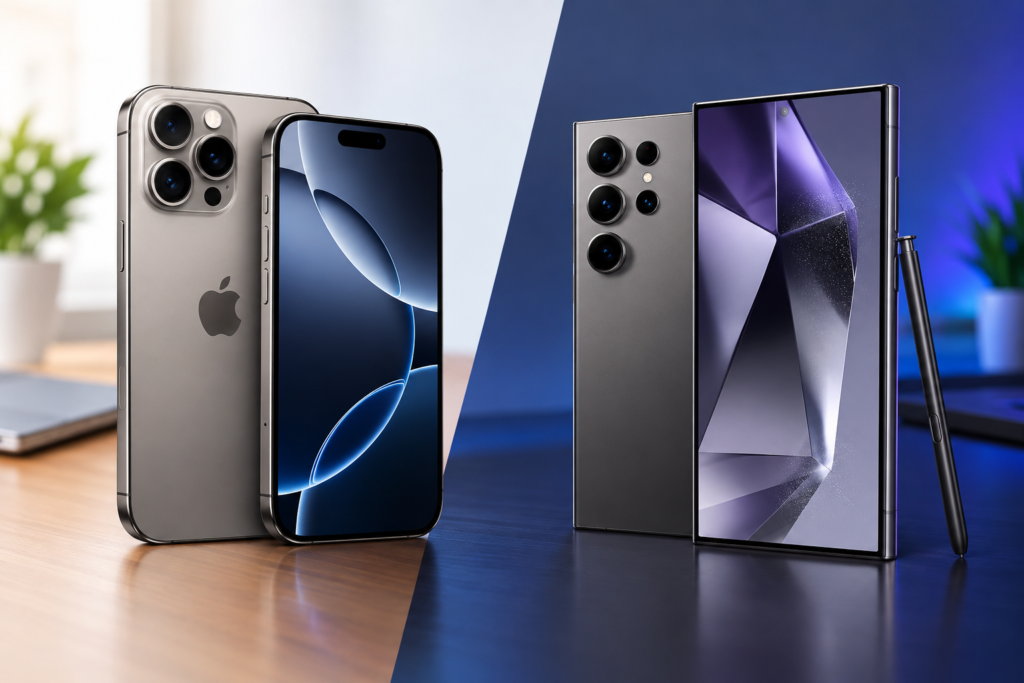
Smartphones have become an essential part of everyday life. From making calls and sending messages to attending online meetings, capturing photos, watching videos, managing finances, and playing games, people depend on their smartphones for almost everything. With so many options available, choosing the right device can be challenging. Two of the most popular smartphone choices are Apple’s iPhone and Samsung’s Galaxy series.
Both brands offer powerful processors, advanced cameras, attractive designs, high-quality displays, and useful software features. However, they approach the smartphone experience differently. Apple focuses on a closely integrated ecosystem, a consistent interface, and long-term software support. Samsung offers a wider variety of devices, extensive customization options, innovative display technology, and greater flexibility across different budgets.
So, which smartphone is better for everyday use: the iPhone or the Samsung Galaxy?
The answer depends on your lifestyle, budget, personal preferences, and the features you use most often. In this article, we compare both smartphone brands across important categories, including performance, battery life, camera quality, display, software, security, durability, productivity, and overall value for money.
1. Design and Build Quality
Design is one of the first things people notice when choosing a smartphone. Both Apple and Samsung produce premium devices with modern designs, durable materials, and carefully designed finishes.
iPhone Design
Apple’s iPhone lineup is known for its clean appearance, recognizable design, and straightforward construction. Depending on the model, an iPhone may feature an aluminum or titanium frame, a glass back, and a high-quality front display.
Apple generally maintains a consistent design language across its devices. The placement of buttons, camera controls, and software elements feels familiar to users upgrading from an older iPhone.
This consistency makes the iPhone appealing to people who prefer a simple and recognizable smartphone design. Its premium models also offer advanced materials and a refined finish.
Samsung Galaxy Design
Samsung offers a broader range of designs through its Galaxy A, Galaxy S, and Galaxy Z series.
The Galaxy A series generally targets budget-conscious and midrange buyers, while the Galaxy S series competes in the premium smartphone market. The Galaxy Z series introduces foldable designs, including devices that open into larger screens.
Samsung’s premium smartphones often feature slim frames, elegant finishes, and high-quality displays. Foldable models are especially attractive to users who want a compact phone that can transform into a larger screen for multitasking.
Which Design Is Better?
The iPhone is an excellent choice for users who appreciate a consistent design and straightforward experience. Samsung is better for people who want more variety, including affordable devices and innovative foldable smartphones.
For everyday use, comfort matters as much as appearance. Before buying either phone, consider its weight, screen size, button placement, and how easily you can operate it with one hand.
2. Display Quality and Viewing Experience
A smartphone display affects almost everything you do, from reading messages and browsing websites to watching videos and editing photos.
Both Apple and Samsung offer excellent displays, particularly on their premium models.
iPhone Display
Modern iPhones use high-quality OLED displays on many models, delivering deep blacks, rich colors, and excellent contrast. However, display specifications vary by model, so buyers should not assume that every iPhone offers the same technology or refresh rate.
Premium iPhones generally provide bright screens, smooth animations, and accurate color reproduction. These characteristics make them suitable for watching movies, browsing social media, reading articles, and viewing photographs.
Apple also emphasizes consistency between its hardware and software. As a result, animations and interface elements often feel smooth and well coordinated.
Samsung Galaxy Display
Samsung is widely recognized for its display technology. Many Galaxy smartphones feature AMOLED displays that produce vibrant colors, strong contrast, and deep blacks.
Premium Galaxy S models commonly offer high refresh rates, making scrolling, gaming, and navigating the interface feel smoother. However, the exact display quality and refresh rate depend on the model.
Samsung also offers different screen sizes and resolutions across its product range. Users can choose a relatively affordable phone for everyday tasks or a premium device with an advanced display for entertainment and productivity.
Some Galaxy models include display settings that let users adjust color modes, brightness behavior, and other visual preferences.
Which Display Is Better?
Both brands deliver excellent viewing experiences in their respective price categories.
Samsung may appeal more to users who prioritize display customization, large screens, and high refresh rates across selected models. Apple’s premium models are also excellent for users who value color consistency and a polished viewing experience.
If you frequently watch videos, read digital content, or play games, compare the actual models rather than relying on brand reputation alone.
3. Performance and Speed
Performance determines how quickly a smartphone opens applications, handles multitasking, processes photographs, and runs demanding games.
Apple and Samsung both offer powerful devices, but their processors and performance characteristics differ across product generations.
iPhone Performance
Apple designs its own smartphone processors, which are optimized to work with iOS. This close integration helps deliver responsive performance and efficient resource management.
Even everyday activities such as opening messaging apps, browsing websites, editing documents, and switching between applications generally run smoothly on modern iPhones.
More powerful iPhone models are also suitable for demanding activities such as mobile gaming, video editing, and recording high-resolution footage.
Another advantage is that Apple controls both the hardware and operating system. This allows the company to optimize the overall experience around a relatively limited range of devices.
Samsung Galaxy Performance
Samsung uses different processors depending on the model and market. Premium Galaxy S smartphones may use Qualcomm Snapdragon processors or Samsung’s Exynos processors, depending on the device and region.
Galaxy A devices use a variety of processors designed for different price categories.
Premium Galaxy smartphones can deliver excellent performance for gaming, multitasking, photography, and productivity. Many also offer substantial memory and storage options.
Samsung’s software includes features designed to help users manage applications and work across multiple windows on supported devices.
However, performance can vary considerably between an entry-level Galaxy A phone and a flagship Galaxy S model.
Which Phone Is Faster?
For ordinary activities, such as messaging, browsing, video streaming, and social networking, both brands offer more than enough performance in their current midrange and premium devices.
The iPhone benefits from Apple’s hardware and software integration. Samsung offers excellent flagship performance while giving buyers more choices across price ranges.
For gaming or demanding professional applications, compare processor benchmarks, sustained performance, cooling, memory, and battery consumption for the exact models you are considering.
4. Camera Quality: iPhone vs Samsung Galaxy
Smartphone cameras are important for everyday photography. People use them to capture family moments, record travel experiences, create social media content, scan documents, and participate in video calls.
Both brands offer impressive camera systems, but their approaches differ.
iPhone Camera Performance
iPhones are popular for their consistent photography and video recording experience.
Modern models can produce detailed images, natural-looking skin tones, and balanced exposure in a wide range of conditions. Computational photography helps the camera process details, manage highlights, and improve images captured in challenging lighting.
Video recording is another area where iPhones are particularly appealing. Depending on the model, users can access advanced stabilization, high-resolution recording, cinematic effects, and professional-oriented video features.
These capabilities make an iPhone attractive to content creators, vloggers, and people who regularly record videos for social media.
However, camera features vary between standard and Pro models. Buyers should check which photographic and video functions are available on their preferred device.
Samsung Galaxy Camera Performance
Samsung Galaxy smartphones also offer powerful camera systems, especially in the premium Galaxy S lineup.
Depending on the model, features may include high-resolution main cameras, ultrawide photography, optical zoom, night photography, and advanced portrait modes.
Some premium Galaxy models provide versatile zoom capabilities, making them useful for photographing distant subjects during travel, outdoor activities, and sporting events.
Samsung also offers camera settings and shooting modes that appeal to people who enjoy experimenting with photography.
Color processing can sometimes differ between Samsung and Apple. Samsung images may appear more vibrant in certain situations, while iPhone photographs may look more natural in others. Results depend on the camera, lighting conditions, and software processing.
Which Camera Is Better?
The best choice depends on the type of photography you enjoy.
Choose an iPhone if you prioritize consistent video quality, straightforward camera controls, and a reliable recording experience.
Consider a premium Samsung Galaxy if you value zoom flexibility, camera customization, and a versatile photography system.
For casual users, either brand can take excellent photographs. It is worth comparing sample images from the exact models, particularly in low light and when photographing moving subjects.
5. Battery Life and Charging
Battery life is essential for people who use their smartphones throughout the day. Nobody wants a phone that frequently needs charging during work, travel, or important activities.
However, battery performance depends on several factors, including battery capacity, processor efficiency, display brightness, network conditions, software optimization, and application usage.
iPhone Battery Life
Modern iPhones can provide dependable battery life, particularly when users choose models designed for longer endurance.
Apple optimizes iOS and its processors to balance performance and energy consumption. For everyday activities such as calls, messaging, browsing, and video playback, many iPhones can comfortably handle a substantial portion of the day.
Nevertheless, battery performance differs across models. Smaller phones may have less battery capacity than larger versions, while heavy gaming, navigation, video recording, and mobile data use can reduce battery life significantly.
Charging speed also varies by model and charging method.
Samsung Galaxy Battery Life
Samsung offers a wide selection of phones with different battery capacities.
Many Galaxy devices include large batteries, and certain midrange models can provide excellent endurance because they combine substantial battery capacity with hardware designed for everyday use.
Premium Galaxy models also support fast wired charging at different speeds depending on the device. Selected models offer wireless charging and reverse wireless charging, allowing compatible accessories to receive power from the phone.
However, a larger battery does not automatically guarantee longer battery life. A high-resolution display, demanding applications, and intensive network usage can increase power consumption.
Which Phone Has Better Battery Life?
There is no universal winner.
Some iPhones offer excellent endurance, while certain Samsung Galaxy models can last particularly long between charges. The result depends on the specific devices being compared.
Before purchasing, check independent battery tests, real-world screen-on time, charging speeds, and the cost of compatible charging accessories.
If you travel frequently or use your phone heavily for navigation and video, battery endurance should be one of your main purchasing criteria.
6. Software Experience: iOS vs Android
The operating system shapes how you interact with your smartphone. It affects notifications, privacy controls, application management, customization, and the overall user experience.
Apple uses iOS, while Samsung’s Galaxy smartphones run Android with Samsung’s One UI interface.
iOS: Simple and Consistent
iOS is known for its relatively consistent interface and close integration with Apple’s hardware.
Settings, system applications, and many common tasks follow familiar patterns across supported iPhone models. This can make the platform easier to learn, particularly for people who prefer straightforward controls.
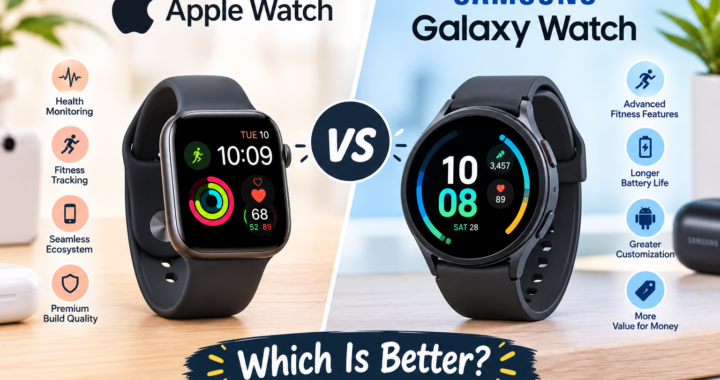
Apple also provides a coordinated experience across its products. Users with a Mac, iPad, Apple Watch, or AirPods can benefit from features that allow compatible devices to work together.
For example, supported devices can share files through AirDrop, synchronize information through iCloud, and transfer certain activities between devices.
However, iOS places restrictions on some forms of customization and system access. People who prefer extensive control over their phones may find this limiting.
Android and Samsung One UI: More Flexibility
Samsung’s One UI provides a customized Android experience with extensive personalization options.
Users can adjust home screens, widgets, themes, icons, notifications, and other interface elements. Depending on the device, they can also use split-screen multitasking, floating application windows, and additional productivity features.
Android generally provides more flexibility for managing files and choosing default applications. Samsung also offers tools for transferring content between compatible devices and managing connected products.
This flexibility can be especially useful for people who enjoy tailoring their phones to their specific needs.
However, the number of settings and features may feel overwhelming to users who prefer a simpler interface.
Which Software Is Better?
Choose iOS if you prefer a consistent experience with relatively straightforward settings and strong integration with other Apple products.
Choose Samsung’s Android experience if you want more customization, flexible multitasking, and greater control over how your smartphone works.
Both systems are capable of handling everyday tasks efficiently. The better option is the one that feels natural to you.
7. App Availability and Everyday Communication
Both iPhones and Samsung Galaxy smartphones support popular applications for communication, entertainment, work, education, banking, and shopping.
Apps such as WhatsApp, Instagram, YouTube, Gmail, Google Maps, Microsoft Office, and Spotify are available on both platforms, although specific features and interfaces may differ.
For most users, there is little difference in the availability of mainstream applications.
Messaging and Video Calls
iPhones offer Apple’s Messages and FaceTime services, which are especially useful when communicating with other Apple users.
Samsung devices support Google Messages, Google Meet, WhatsApp, and other communication platforms.
Your preferred messaging application may matter more than the smartphone brand. If your family, friends, or workplace primarily use a particular service, make sure it works well on the device you choose.
Work and Productivity
Both platforms support email, calendars, cloud storage, document editing, video conferencing, and task management applications.
Samsung has an advantage for certain productivity workflows because compatible Galaxy devices can support Samsung DeX, which provides a desktop-style interface when connected to a suitable display.
This feature can help users work with documents and applications on a larger screen. Availability and capabilities vary by device.
Apple offers a strong productivity experience through its applications and integration with Mac and iPad devices.
For most everyday users, both brands provide everything needed for work and communication.
8. Security and Privacy
Smartphones store sensitive information, including photographs, personal messages, banking applications, location data, and account credentials. Security should therefore be an important part of any purchasing decision.
Apple and Samsung both provide multiple layers of protection.
iPhone Security
Apple uses several security mechanisms, including biometric authentication, application permissions, device encryption, and controls governing access to personal information.
Face ID is available on supported iPhone models and allows users to unlock their devices and authenticate certain actions using facial recognition.
Apple also provides privacy controls that allow users to manage application access to their location, camera, microphone, contacts, and photographs.
Its integrated hardware and software approach helps the company manage security updates across supported devices.
Samsung Galaxy Security
Samsung Galaxy smartphones include Android security features and additional protections through Samsung’s security platform, Samsung Knox.
Depending on the model, users may have access to fingerprint recognition, facial recognition, secure folders, privacy dashboards, and additional device-management tools.
Samsung Knox provides security mechanisms designed to protect sensitive information and strengthen device integrity.
Galaxy devices also allow users to control application permissions and manage access to sensitive information.
Which Is Safer?
Both brands offer strong security features, but no smartphone is completely immune to threats.
Security depends on using a supported device, installing updates, downloading applications from trusted sources, and practicing safe online behavior.
Choose a phone with a strong update commitment, use a secure screen lock, enable account protection, and avoid suspicious links or applications.
9. Software Updates and Long-Term Support
Software updates introduce new features, correct bugs, and address security vulnerabilities. They can also influence how long a smartphone remains useful.
Apple has a long-standing reputation for providing software updates to iPhones over several years. However, compatibility with individual iOS versions varies by model, and not every device receives every feature.
Samsung has significantly expanded its update commitments in recent years. Certain newer flagship and selected midrange models qualify for up to seven generations of Android operating system upgrades and seven years of security updates, subject to the specific model’s policy.
This is a major advantage for people who plan to keep their phones for a long time.
However, Samsung’s update commitment is not identical across its entire product range. Older devices and lower-priced models may have different support periods.
When comparing two phones, check the manufacturer’s official support policy for the exact model.
Longer support can improve value because it allows you to keep a device secure and usable without upgrading every year or two.
10. Storage, Customization, and File Management
Storage becomes important as people accumulate photographs, videos, documents, games, and applications.
Both brands offer different storage capacities, but buyers should check their options carefully.
iPhone Storage
iPhones generally offer fixed internal storage configurations. Most models do not provide a microSD card slot, so users must choose an appropriate capacity when purchasing the device.
Cloud services such as iCloud and other compatible platforms can help users store photographs and documents online.
However, cloud storage may require a paid subscription if the free allowance is insufficient.
Samsung Galaxy Storage
Samsung also offers different internal storage configurations. Some Galaxy models provide higher capacities, while certain devices may support expandable storage, depending on the model.
Most recent premium Galaxy S and Z devices do not include a microSD card slot, so it is important to check the specifications rather than assume expansion is available.
Samsung’s Android interface also provides flexible file-management options, making it convenient to organize documents and transfer files between supported devices.
Which Is Better for Storage?
Samsung may appeal to users who prefer flexible file management and want more choices across different price ranges.
The iPhone works well for people who are comfortable managing storage through internal capacity and cloud services.
For either brand, consider how much space you need for photographs, video recordings, offline downloads, and large applications before buying.
11. Price and Value for Money
Price is one of the most significant differences between Apple’s iPhone lineup and Samsung’s Galaxy range.
iPhone Pricing
Apple primarily targets the premium smartphone market, although older models and certain more affordable options may provide lower entry points.
iPhones often retain substantial resale value compared with many competing smartphones, although actual resale prices depend on the model, condition, storage capacity, battery health, and market demand.
For people who plan to upgrade periodically, resale value can reduce the effective cost of ownership.
However, repairs, accessories, and cloud subscriptions may add to the overall expense.
Samsung Galaxy Pricing
Samsung serves a broader range of budgets.
The Galaxy A series includes budget-friendly and midrange devices, while the Galaxy S series targets premium buyers. Galaxy Z models cater to people interested in foldable technology.
This variety makes Samsung attractive to consumers who want to select a device according to their budget.
Samsung also frequently offers discounts, promotional bundles, exchange benefits, and trade-in offers, depending on the market and sales period.
Nevertheless, the actual value of any offer depends on the device’s specifications, warranty, and final price.
Which Brand Offers Better Value?
Samsung is generally the more flexible choice for buyers who want a wider range of prices and features.
An iPhone may offer better value for someone who prioritizes Apple’s ecosystem, long-term software support, and potential resale value.
The best approach is to compare the total cost of ownership rather than the purchase price alone.
12. Ecosystem and Connected Devices
A smartphone becomes even more useful when it works smoothly with other devices.
Apple and Samsung both offer ecosystems that connect phones with watches, tablets, computers, earbuds, and other accessories.
Apple’s Ecosystem
Apple’s ecosystem includes the iPhone, Mac, iPad, Apple Watch, AirPods, and services such as iCloud.
Features such as AirDrop, Handoff, and device synchronization can make it easier to move between compatible Apple products.
For example, you may start working on a document on an iPhone and continue on a Mac or iPad when supported applications and settings allow it.
This integration is especially attractive to users who already own several Apple devices.
Samsung’s Ecosystem
Samsung offers Galaxy smartphones, Galaxy Watch devices, Galaxy Buds, tablets, laptops, and connected home products.
Features such as Quick Share allow compatible devices to exchange files, while Samsung’s broader software ecosystem can help users synchronize information across supported products.
Galaxy smartphones can also work with Windows computers through supported integration features.
Samsung’s ecosystem is appealing to people who want flexibility across different device types and operating systems.
Which Ecosystem Is Better?
Apple is an excellent choice for people already invested in its products.
Samsung may suit users who prefer Android, Windows integration, and a wider selection of devices at different prices.
Your existing technology can make a significant difference when deciding which smartphone to buy.
13. Gaming and Entertainment
Smartphones are widely used for gaming, music, movies, live streaming, and social media.
Both brands offer devices capable of delivering excellent entertainment experiences.
Premium iPhones provide powerful processors, responsive touchscreens, and access to a broad selection of mobile games. Certain games are optimized for Apple’s hardware, and compatible models can support demanding graphics.
Samsung’s premium Galaxy devices also offer powerful processors, high-quality displays, and features designed to improve gaming performance. Their large screens and high refresh rates on supported models can make games and videos more immersive.
Samsung’s customization and multitasking features may appeal to people who want to switch between games, messaging applications, and other tasks.
However, gaming performance depends on the specific processor, thermal management, display refresh rate, and game optimization.
For watching videos, both brands offer excellent options. If you spend hours streaming content, compare screen size, speaker quality, battery endurance, and brightness.
14. Durability and Repair Costs
Durability affects how well a smartphone handles everyday accidents, travel, and regular use.
Many premium iPhones and Galaxy smartphones feature water- and dust-resistance ratings. However, protection varies by model, and resistance does not mean that a device is waterproof under all conditions.
Both brands use durable glass and metal construction on many premium devices, but glass can still crack if a phone is dropped.
A protective case and screen protector can help reduce the risk of damage.
Repair costs vary depending on the model, damaged component, warranty status, and service provider. Premium devices from either brand can be expensive to repair, particularly when the display or camera system is damaged.
Before buying, review the warranty terms, authorized repair options, and availability of replacement parts in your area.
In India, also consider the accessibility of authorized service centers and the cost of common repairs.
A phone that is affordable to purchase but expensive to maintain may not provide the best long-term value.
15. iPhone vs Samsung Galaxy: Quick Comparison
The following table summarizes how the two brands compare across important everyday-use categories.
| Feature | Apple iPhone | Samsung Galaxy |
|---|---|---|
| Design | Consistent and premium | Wide variety of designs |
| Display | Excellent on supported models | Excellent displays, especially on premium models |
| Performance | Strong hardware-software integration | Powerful performance across selected models |
| Camera | Consistent photography and strong video features | Versatile camera options and zoom on selected models |
| Battery life | Depends on the model and usage | Depends on the model and usage |
| Software | iOS with a consistent interface | Android with One UI customization |
| Security | Strong integrated security features | Android security plus Samsung Knox |
| Updates | Long-term support across supported models | Extended support on selected newer models |
| Customization | More limited | Extensive customization |
| File management | More controlled | Generally more flexible |
| Price range | Primarily premium, with some lower-cost options | Budget, midrange, premium, and foldable |
| Ecosystem | Excellent integration with Apple products | Broad device range and Windows integration |
| Gaming | Strong performance on capable models | Strong performance on premium models |
| Resale value | Often strong, depending on the model | Varies by model and market |
| Foldable phones | No foldable iPhone currently in the established lineup | Galaxy Z Fold and Z Flip options |
16. Which Smartphone Is Better for Different Types of Users?
The right choice becomes easier when you consider your everyday habits.
For students: Samsung’s range of affordable devices can provide good value for online classes, note-taking, messaging, and entertainment. An iPhone may be suitable for students who already use Apple products or prefer iOS.
For professionals: Both brands support email, video meetings, calendars, document editing, and workplace applications. Samsung may appeal to people who benefit from its desktop-style DeX functionality on compatible devices, while iPhone users may appreciate integration with Mac and iPad.
For content creators: The iPhone is worth considering if video recording and a consistent camera experience are priorities. Premium Samsung models are also strong choices for photography, zoom, and camera flexibility.
For gamers: Compare flagship processors, cooling performance, display refresh rates, battery life, and game compatibility. Neither brand is automatically better for every game.
For budget-conscious buyers: Samsung generally provides more options across lower price categories, making it easier to find a phone that matches a specific budget.
For people who want simplicity: The iPhone may be a better fit if you prefer a consistent interface and limited setup complexity.
For customization enthusiasts: Samsung’s One UI offers extensive control over the home screen, widgets, themes, multitasking, and supported system features.
For existing Apple users: An iPhone can provide a more seamless experience if you already own a Mac, iPad, Apple Watch, or other compatible Apple products.
17. Final Verdict: iPhone vs Samsung Galaxy
So, which smartphone is better for everyday use?
There is no single winner because both brands offer excellent devices with different strengths.
The iPhone is a strong choice for people who value consistent performance, straightforward software, high-quality video recording, integrated security features, and a connected Apple ecosystem. It is particularly appealing to users who already own Apple products and want their devices to work together smoothly.
Samsung Galaxy smartphones are excellent for people who prefer greater customization, a broader range of prices, versatile camera options, flexible multitasking, and access to different device formats, including foldable phones. Samsung’s extensive lineup also makes it easier for buyers to find a device that fits their budget.
For everyday activities such as calling, messaging, browsing, banking, photography, streaming, and social networking, both brands can perform exceptionally well.
Choose an iPhone for a streamlined experience and strong Apple ecosystem integration. Choose a Samsung Galaxy for flexibility, customization, and more options across different budgets.
Before making your final decision, compare the exact models you can afford. Look at battery endurance, camera performance, storage, software support, repair costs, and available offers. These factors will have a greater impact on your daily experience than the brand name alone.
Ultimately, the best smartphone is not necessarily the most expensive or technically advanced device. It is the one that fits your lifestyle, meets your daily needs, and provides reliable performance for years to come.
Frequently Asked Questions (FAQs)
1. Is an iPhone better than a Samsung Galaxy for everyday use?
Both are excellent for everyday use. The iPhone offers a consistent interface, while Samsung provides greater customization and more choices across different budgets.
2. Which smartphone has a better camera?
Both brands offer excellent cameras. iPhones are popular for video recording, while premium Samsung Galaxy models provide versatile photography and zoom capabilities.
3. Which phone has better battery life?
Battery life depends on the specific model, battery capacity, display, and usage. Compare independent battery tests before choosing between two devices.
4. Is Samsung cheaper than the iPhone?
Samsung generally offers more budget-friendly options through its Galaxy A series. Apple’s lineup focuses more heavily on the premium market.
5. Which phone is better for gaming?
Both brands offer powerful gaming smartphones. Compare processor performance, thermal management, refresh rate, battery life, and compatibility with your preferred games.
6. Which smartphone is easier to use?
Many users find iOS straightforward because of its consistent interface. Samsung’s One UI offers more settings and customization options.
7. Do iPhones last longer than Samsung phones?
Both can last several years with proper care. Actual longevity depends on hardware condition, battery health, software support, and repairability.
8. Which phone is better for photography?
Both can produce excellent photographs. Samsung may offer more zoom flexibility on selected models, while iPhones are particularly popular for video recording.
9. Is Samsung more customizable than the iPhone?
Yes. Samsung’s Android interface generally offers more customization options for home screens, widgets, themes, default applications, and multitasking.
10. Which smartphone should I buy in 2026?
Choose according to your budget, preferred operating system, camera requirements, battery needs, software support, and existing devices. Compare specific models before purchasing.
Disclaimer: This article is for informational purposes only. Smartphone specifications, prices, availability, software features, and warranty conditions may vary by model, market, and region. Readers should verify the latest details through the official Apple and Samsung websites before making a purchase.