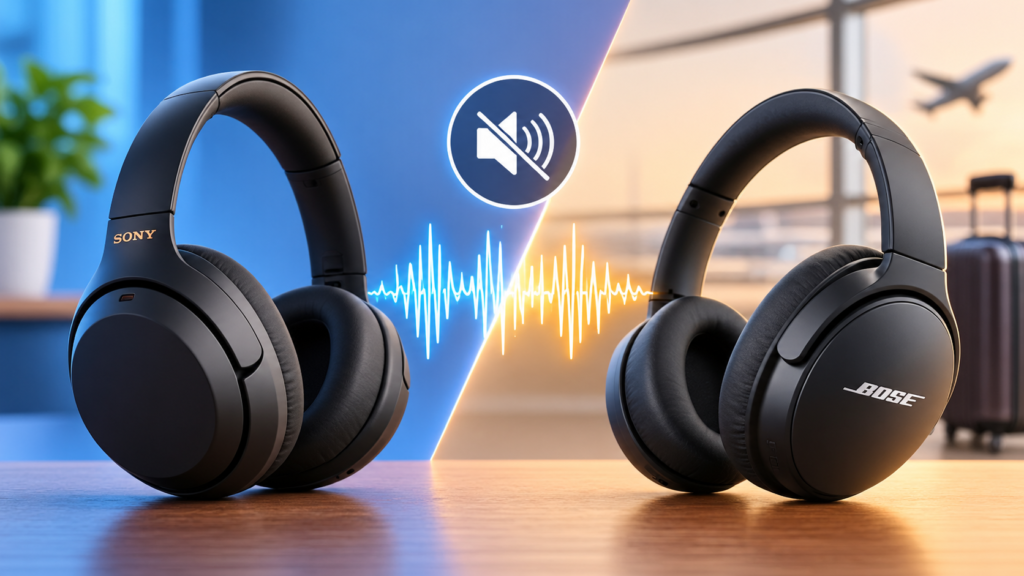
Noise-cancelling headphones have become essential for people who travel frequently, work remotely, study in busy environments, or simply want to enjoy music without distractions. Among the leading brands in this category, Sony and Bose stand out for their advanced noise-cancellation technology, comfortable designs, and premium audio performance. Both companies offer headphones designed to reduce unwanted background sounds, but their approaches to sound quality, comfort, battery life, and additional features differ.
Choosing between Sony and Bose can be challenging because both brands produce excellent headphones for everyday use. Sony is widely recognized for its feature-rich headphones, customizable sound settings, and strong noise cancellation. Bose, meanwhile, has built a reputation for comfortable designs and particularly effective noise reduction, especially for frequent travelers and people working in noisy environments.
In this comparison, we will examine Sony and Bose headphones across several important areas, including active noise cancellation, sound quality, comfort, battery life, connectivity, pricing, and overall value. By the end, you will have a clearer understanding of which brand may suit your needs.
Understanding Active Noise Cancellation
Before comparing Sony and Bose, it is important to understand how active noise cancellation works.
Active noise cancellation, commonly called ANC, uses microphones to detect unwanted environmental sounds. The headphones then generate opposing sound waves that reduce the impact of those noises before they reach your ears.
This technology is particularly effective against consistent, low-frequency sounds, such as airplane engines, train noise, air conditioners, and the steady hum of office equipment.
However, ANC does not eliminate every sound equally. Sudden noises, nearby conversations, keyboard typing, and high-pitched sounds can remain audible. The effectiveness also depends on the headphones’ design, the quality of their microphones, the fit of the ear cushions, and the surrounding environment.
Both Sony and Bose combine ANC technology with physical noise isolation. Their over-ear headphones use padded ear cups to create a seal around your ears, helping reduce external sounds even before electronic noise cancellation begins.
The difference lies in how each company balances noise reduction, comfort, sound quality, and user control.
Sony vs Bose: Brand Overview
Sony Headphones
Sony is a major electronics manufacturer with extensive experience in audio equipment, music technology, and consumer electronics.
Its premium wireless headphone range includes models such as the Sony WH-1000XM5 and WH-1000XM6. These headphones combine active noise cancellation with adaptive sound controls, customizable equalizers, multipoint connectivity, and smart listening features.
Sony generally appeals to users who want a flexible listening experience. Its headphones provide several customization options, allowing users to adjust audio settings, control ambient sound, and personalize how the headphones respond to different environments.
Another advantage is Sony’s broad audio ecosystem. Depending on the model, users can benefit from features such as high-quality Bluetooth audio codecs, spatial audio options, and advanced microphone processing.
Bose Headphones
Bose is another established name in premium audio technology. The company is particularly well known for its noise-cancelling headphones, which are popular among commuters, office workers, and frequent air travelers.
Its premium headphone lineup includes the Bose QuietComfort Ultra Headphones and Bose QuietComfort Headphones.
Bose emphasizes comfortable listening, effective noise cancellation, and straightforward controls. Its headphones are designed to make it easy to create a quieter listening environment without requiring extensive adjustments.
Some Bose models also include adjustable noise-cancellation levels, awareness modes, immersive audio features, and customizable listening settings.
For buyers who prioritize comfort and noise reduction over extensive technical customization, Bose can be an attractive option.
1. Noise Cancellation Performance
Noise cancellation is the most important consideration when comparing these brands.
Both Sony and Bose produce headphones capable of reducing background noise substantially. However, the better choice depends on the specific headphone model, the type of noise, and how the headphones fit your head.
Sony’s Noise Cancellation Technology
Sony’s premium headphones use multiple microphones and digital signal processing to monitor environmental sounds and adjust noise cancellation.
Models in the WH-1000X series include adaptive technologies designed to optimize noise reduction under different listening conditions.
For example, Sony headphones can reduce the steady rumble of aircraft engines, the sound of public transportation, and background noise in busy offices.
Certain models also offer automatic sound adjustments based on your activity or surroundings. These features can make the headphones convenient for people who move between home, work, public transport, and outdoor environments throughout the day.
Sony’s noise cancellation can be especially appealing when combined with its ambient sound controls, which allow users to choose how much outside noise they want to hear.
Bose’s Noise Cancellation Technology
Bose has developed a strong reputation for noise cancellation, particularly in its QuietComfort headphone range.
Its premium models are designed to reduce persistent background noise while maintaining a comfortable listening experience.
This can be beneficial during long flights, train journeys, and work sessions in noisy locations.
Bose headphones also provide different listening modes, depending on the model. These allow users to switch between stronger noise cancellation and awareness settings when they need to hear announcements or speak with someone nearby.
The company places significant emphasis on creating a quiet listening environment without making the controls unnecessarily complicated.
Which Brand Wins?
There is no universal winner in every noise environment.
Sony’s flagship headphones offer sophisticated adaptive controls and strong all-around noise cancellation. Bose’s premium QuietComfort models are also highly competitive, particularly for travelers and people who prioritize a quiet, comfortable listening experience.
Verdict: Sony and Bose are both excellent choices for ANC. Compare current flagship models directly rather than assuming one brand always performs better.
2. Sound Quality: Sony vs Bose
Noise cancellation matters, but sound quality determines how enjoyable your headphones are for music, movies, podcasts, and calls.
Sony and Bose have different sound characteristics, although both provide customizable listening options on supported models.
Sony Sound Quality
Sony headphones often appeal to listeners who enjoy a powerful, engaging sound profile.
Many Sony models deliver noticeable bass, clear vocals, and detailed audio. This presentation can work well for pop, electronic music, hip-hop, and other bass-heavy genres.
Sony also provides an equalizer through its companion app on supported models. Users can adjust bass, mids, and treble to suit their preferences.
Some Sony headphones support high-quality Bluetooth codecs, including LDAC. However, codec availability depends on the model, connected device, and audio settings.
Sony’s customization options make its headphones appealing to people who like experimenting with sound rather than relying entirely on factory settings.
Bose Sound Quality
Bose headphones generally provide a balanced and polished listening experience, although the exact sound signature varies by product.
Vocals are typically presented clearly, while bass provides depth without necessarily dominating every recording.
This makes Bose headphones suitable for different types of content, including music, podcasts, video calls, and films.
Supported models also provide adjustable sound settings through the Bose app, allowing listeners to modify their preferred audio profile.
Some premium Bose headphones include immersive audio features designed to create a more spacious listening experience.
Which Brand Wins?
The answer depends on personal preference.
Sony may appeal more to users who want detailed sound customization and strong codec support on compatible devices. Bose may suit listeners who prefer a polished sound experience with minimal adjustment.
Verdict: Sony is an attractive choice for customization, while Bose is an excellent option for people who prefer convenient, enjoyable everyday listening.
3. Comfort and Fit
Comfort is essential when choosing noise-cancelling headphones because many users wear them for several hours at a time.
Even headphones with excellent ANC can become frustrating if they create pressure around the ears or feel too heavy.
Sony Comfort
Sony’s premium over-ear headphones generally feature soft ear cushions, adjustable headbands, and lightweight designs.
However, comfort varies by model and head shape.
Some users may find Sony headphones comfortable during long listening sessions, while others may prefer a different headband shape or ear-cup design.
The seal around the ears also matters because gaps can reduce passive isolation and affect overall noise-cancellation performance.
People who wear glasses should pay particular attention to how the ear cushions fit around the frames.
Bose Comfort
Bose has a long-standing reputation for comfortable headphones.
Its QuietComfort range emphasizes cushioned ear cups, practical headband designs, and a fit intended for extended listening.
This can make Bose headphones appealing to frequent travelers and professionals who wear headphones throughout the working day.
Nevertheless, comfort remains subjective. Head size, ear shape, glasses, and sensitivity to clamping pressure all influence the experience.
Which Brand Wins?
Bose is often a strong starting point for people who prioritize long-session comfort. Sony also offers comfortable premium headphones, and the differences depend on the exact models being compared.
Verdict: Bose deserves consideration for extended wear, but try both brands if possible before purchasing.
4. Battery Life and Charging
Battery life is another important factor, particularly for travelers and people who use headphones throughout the workday.
Both brands offer wireless headphones with rechargeable batteries, USB charging, and convenient everyday operation.
Sony Battery Performance
Many recent premium Sony over-ear headphones advertise approximately 30 hours of playback with noise cancellation enabled.
Battery performance varies according to the model, volume level, Bluetooth settings, and other features in use.
Some models support quick charging, allowing users to gain additional listening time from a short charging session.
Sony’s battery performance makes its premium headphones suitable for daily commuting, office work, and long-distance travel.
Bose Battery Performance
Bose battery life also varies by model and operating conditions.
Several premium QuietComfort headphones offer around 24 hours of listening with noise cancellation enabled, while certain newer models may provide different figures.
Additional features, including immersive audio, can reduce battery life on supported devices.
Bose also provides charging options intended to make everyday use convenient.
Which Brand Wins?
Sony’s premium WH-1000X models have often offered longer advertised battery life than comparable Bose flagship headphones, although exact results depend on the specific products.
Verdict: Sony may be the better choice for users who prioritize longer playback between charges. Check the specifications of the exact models before buying.
5. Features and Companion Apps
Modern headphones offer much more than basic playback and noise cancellation.
Features such as multipoint Bluetooth, customizable controls, automatic pausing, and ambient sound settings can make everyday listening more convenient.
Sony Features
Sony’s companion app provides access to a range of settings on compatible headphones.
Depending on the model, these may include:
- Customizable equalizer settings.
- Adjustable ambient sound levels.
- Adaptive sound controls.
- Multipoint Bluetooth connectivity.
- Automatic playback and pause features.
- Firmware updates and device settings.
- Additional spatial audio or listening features.
These options can make Sony headphones particularly attractive to people who want to tailor their listening experience.
For example, a user might prefer stronger noise cancellation during a flight but more ambient sound while walking through a busy station.
Sony’s controls allow supported headphones to accommodate these different situations.
Bose Features
Bose’s companion app also offers important customization options.
Depending on the headphones, users may be able to access:
- Adjustable noise-cancellation levels.
- Awareness or transparency modes.
- Customizable equalizer settings.
- Bluetooth device management.
- Immersive audio modes.
- Listening presets and personalized settings.
Bose’s interface is designed to make common adjustments accessible without overwhelming users with too many controls.
Which Brand Wins?
Sony has a strong appeal for users who enjoy extensive settings and adaptive controls. Bose is attractive to those who want accessible controls and a relatively straightforward experience.
Verdict: Sony may suit feature-focused buyers, while Bose is a good option for people who value simplicity.
6. Call Quality and Microphone Performance
Headphones are frequently used for work meetings, video calls, phone conversations, and voice messages.
Microphone performance is therefore an important consideration, particularly for people who work remotely.
Sony Call Quality
Sony’s premium headphones use multiple microphones and signal-processing technology to improve voice pickup and reduce background noise.
Performance depends on the model and the surrounding environment.
In quiet offices, Sony headphones can provide clear voice communication. In windy outdoor settings or very noisy locations, background sounds may still affect call quality.
Bose Call Quality
Bose headphones also use microphone systems and processing designed to make speech easier to understand.
They can work well for everyday phone calls, remote meetings, and conversations while traveling.
However, no wireless headphone microphone can guarantee perfect performance in every environment.
Wind, traffic, nearby conversations, and poor network connections can still affect the listening experience.
Which Brand Wins?
Both brands offer capable microphones in their premium ranges, but performance can differ substantially between models.
Verdict: If you frequently attend meetings, compare microphone samples from independent reviews of the exact headphones you are considering.
7. Connectivity and Device Compatibility
Compatibility is important if you use headphones with several devices, such as a smartphone, laptop, tablet, and television.
Sony and Bose both offer Bluetooth connectivity, but supported codecs and additional features vary.
Sony Connectivity
Sony headphones generally work with Android phones, iPhones, Windows computers, Mac computers, and other Bluetooth-enabled devices.
Compatible models may support multipoint connectivity, allowing the headphones to maintain connections with two devices.
This is useful for someone listening to music on a laptop who also needs to answer calls from a smartphone.
Certain Sony models support LDAC, which can provide higher-bitrate Bluetooth audio when the connected device supports it and the relevant settings are enabled.
Bose Connectivity
Bose headphones also support a broad range of Bluetooth-enabled devices.
Depending on the model, users may be able to connect to multiple devices, switch between audio sources, and manage connections through the companion app.
This is useful for people who alternate between work and personal devices.
Which Brand Wins?
Both brands offer practical connectivity, but supported codecs and multipoint behavior differ by model.
Verdict: Sony may appeal to Android users who want LDAC support, while Bose provides broad compatibility and convenient everyday connections. Neither brand should be chosen solely on compatibility without checking the specific model.
8. Price and Overall Value
Sony and Bose compete in the premium headphone market, although both companies sell different models at different prices.
The best value depends on your budget, desired features, and current retailer discounts.
Sony Pricing
Sony’s flagship headphones are premium products, but previous-generation models may become more affordable when newer products arrive.
This can make older WH-1000X headphones attractive to buyers who want strong noise cancellation without paying the newest flagship price.
Sony’s combination of ANC, sound customization, battery life, and connectivity can offer good overall value for feature-focused users.
Bose Pricing
Bose also occupies the premium segment, with pricing influenced by the model, features, and retailer.
Previous-generation QuietComfort headphones may offer excellent value during promotions.
Buyers who prioritize comfort and noise cancellation may find Bose worth considering even when its price is similar to competing Sony models.
Which Brand Wins?
There is no fixed winner because prices change frequently.
Verdict: Compare the current selling price of equivalent Sony and Bose models, including warranty coverage, return policies, and included accessories.
9. Which Headphones Are Better for Travel?
Travel is one of the most common reasons people buy noise-cancelling headphones.
Aircraft engines, train noise, airport announcements, and crowded terminals can make journeys tiring.
Both Sony and Bose offer premium headphones designed to make these environments more comfortable.
Sony may appeal to travelers who want long battery life, adaptive settings, and extensive sound customization.
Bose may be especially attractive to people who value a comfortable fit and straightforward noise-cancellation controls during long journeys.
For air travel, both brands can reduce the persistent low-frequency rumble associated with aircraft cabins. Neither should be expected to eliminate every announcement or conversation.
When traveling, consider additional factors such as foldability, carrying-case size, charging convenience, and whether the headphones support wired listening.
Travel verdict: Both are excellent candidates. Choose the pair that provides the best combination of noise reduction, comfort, and portability for you.
10. Sony vs Bose: Quick Comparison
| Feature | Sony | Bose |
|---|---|---|
| Active noise cancellation | Excellent on flagship models | Excellent on flagship models |
| Sound customization | Extensive options on supported models | Customizable settings on supported models |
| Sound profile | Often engaging, with customizable bass | Generally polished, with model-dependent tuning |
| Comfort | Comfortable, depending on model and fit | Strong reputation for long-session comfort |
| Battery life | Some flagship models advertise around 30 hours with ANC | Many premium models advertise around 24 hours, depending on model |
| Connectivity | Broad compatibility; LDAC on selected models | Broad compatibility |
| Smart features | Extensive adaptive controls on supported models | Convenient listening modes and controls |
| Travel suitability | Excellent | Excellent |
| Best for | Feature-focused listeners and users who value customization | Users who prioritize comfort and easy noise control |
| Overall value | Depends on model and current price | Depends on model and current price |
These comparisons describe general product-line tendencies. Specifications and features vary by individual headphone model.
How to Choose Between Sony and Bose Headphones
Before purchasing, consider how you plan to use your headphones.
Choose Sony if:
- You want extensive sound customization.
- You prioritize battery life in supported flagship models.
- You enjoy adjusting equalizer settings.
- You want adaptive listening features.
- You use compatible Android devices and value LDAC support.
Choose Bose if:
- You prioritize comfortable listening over long periods.
- You frequently travel by airplane or train.
- You prefer straightforward noise-cancellation controls.
- You want effective noise reduction without spending much time adjusting settings.
- You find Bose’s fit and sound presentation more enjoyable.
Whichever brand you choose, consider testing the headphones in person. A comfortable fit and effective seal can make a significant difference in noise isolation and everyday enjoyment.
Final Verdict: Sony vs Bose Headphones
Sony and Bose are both excellent choices for people who want premium noise-cancelling headphones. Both brands provide sophisticated ANC, good sound quality, wireless connectivity, and features designed for travel and everyday listening.
Sony stands out for its customizable sound settings, adaptive listening features, and strong battery life on several flagship models. It is an attractive choice for users who enjoy controlling how their headphones sound and behave.
Bose is particularly appealing to people who value comfortable designs, convenient controls, and effective noise cancellation for long journeys or extended listening sessions.
So, which brand offers better noise cancellation? There is no universal winner. Both Sony and Bose perform at a high level, and the difference depends on the specific models, the type of background noise, and the fit around your ears.
If you want extensive customization and a feature-rich experience, Sony is an excellent place to start. If comfort and straightforward noise control are your priorities, Bose deserves serious consideration.
Ultimately, the best headphones are the ones that reduce the distractions you encounter most often, feel comfortable throughout the day, and fit your budget.
Before buying, compare the latest specifications, current prices, warranty terms, and independent noise-cancellation tests for the exact models on your shortlist.